Scientific Validation
The PI Behavioral Assessment rests on hundreds of validation studies over six decades of commercial use and meets the European standard for reliability, validity, and fairness in psychological testing.
Credentials: Predictive Index Certified Consultant
The Predictive Index is a validated behavioral assessment used by thousands of companies. It measures four drives, Dominance, Extraversion, Patience, and Formality, to show how each person approaches work. I use it to help leadership teams communicate, collaborate, and make better people decisions.

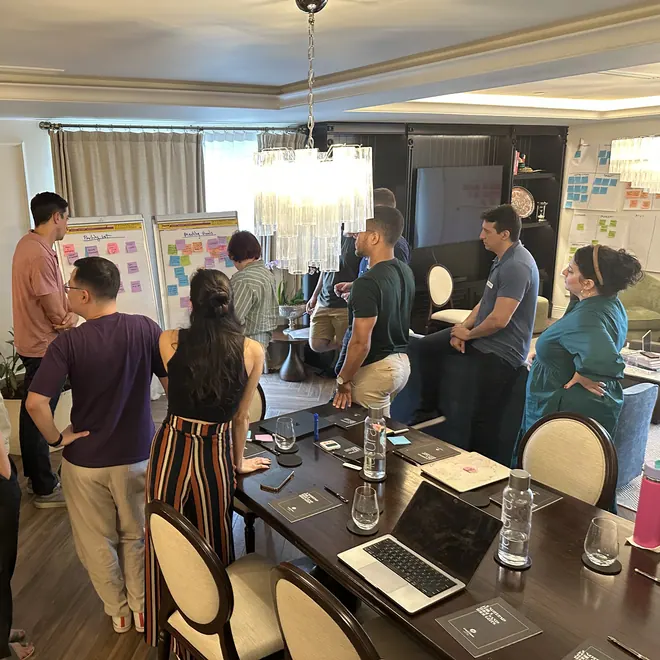

Strategy and operating systems only work if the people running them work together. PI adds objective data on the human side, where most leadership team problems actually start.
The PI Behavioral Assessment rests on hundreds of validation studies over six decades of commercial use and meets the European standard for reliability, validity, and fairness in psychological testing.
PI goes past individual profiles. Team analysis, job modeling, and candidate fit tools give leaders a complete system for hiring, development, and team design rather than a personality report.
Unlike general personality tests, PI was designed for the workplace. The four drives speak directly to how people work, communicate, decide, and collaborate, so the insights are usable the same day.
PI links behavioral data to business outcomes across the employee lifecycle, from the hiring decision to the leadership team that has to work together every week.
A six-minute assessment of natural drives and workplace motivation, sorted into one of seventeen reference profiles that describe work style, communication, decision-making, and risk tolerance.
A measure of learning ability and cognitive agility: how quickly someone absorbs new information, adapts, and solves complex problems.
How individual profiles interact as a group, showing friction points, communication gaps, and collaboration risks before they turn into conflict.
Modeling what a role actually demands and measuring candidates against it, so hiring rests on evidence rather than instinct.
The data is most valuable for companies building or reshaping a leadership team, and for founders who want people decisions to rest on more than gut feel.
The company is adding or restructuring leadership roles and needs to know who fits which seat.
Communication, collaboration, or decision-making is breaking down, and skill is not the explanation.
Hires are made on interviews and gut feel, and too many of them do not work out.
A new strategy demands different strengths, and it is not clear whether the current team has them.
The Predictive Index works through a global network of certified partners who implement the platform with client companies.
Arnold Daniels founded The Predictive Index in 1955, after a career-long interest in the psychology behind successful teams that began as a U.S. Army flight navigator. The assessment has been used by organizations around the world for more than six decades.
My certification combined online coursework with in-person training at The Predictive Index in Boston. It covered the assessment's science and history, its use in hiring, development, and team dynamics, profile interpretation and readback technique, team diagnostics, and the PI software for administration, analysis, and reporting.
PI answers the questions that strategy frameworks cannot.
Frameworks like Scaling Up and Metronomics handle strategy, execution, and operating rhythm. PI adds something different: objective data on the human dynamics that decide whether those systems work. It shows why certain leaders clash, why communication breaks down, and why some thrive in ambiguity while others need structure.
Different strategies need different teams. A company pushing into new markets needs a different behavioral mix than one built on operational excellence. PI's team analysis shows whether a leadership team matches what its strategy asks of it.
I use PI in executive coaching and in LEADERSHIP360 to inform hiring, align leadership teams, and diagnose performance problems that come from behavioral friction rather than skill gaps.
Executives whose teams used PI and team assessments to work better together.
"Bruce's mastery of the Predictive Index and team assessment tools has helped us understand each other better and become a more cohesive team. He helped us think through target customers, assess our talent strategy, and define strategies to move forward."
"Equally valuable were the team exercises that helped us understand each other's working styles and communication preferences, leading to significantly improved collaboration. Bruce's facilitation style balanced analytical rigor with team dynamics expertise."
"Any CEO of a growth company would be fortunate to have Bruce as a strategic partner. His guidance significantly accelerates the growth process while reducing the risk and complexity that inevitably accompany expansion."
Predictive Index data runs through LEADERSHIP360, the Leadership Team Program. It rebuilds the leadership team around the strategy, with the right people in the right seats and accountability that holds without you in the room.
Your company has outgrown what one person can hold. LEADERSHIP360 builds the leadership team, the accountability, and the operating rhythm that let the business run without you in the room.
Straight answers on the assessment, how teams use it, and how it compares. Anything not covered here is a good topic for a strategy call.
The Predictive Index is a validated behavioral assessment used by thousands of companies to understand how people approach work. It measures four drives, Dominance, Extraversion, Patience, and Formality, and matches each person to one of seventeen reference profiles. Leaders use the results for hiring, team design, and leadership development, so people decisions rest on evidence.
The Predictive Index was designed and validated for the workplace, with hundreds of validation studies over six decades of commercial use. Myers-Briggs describes personality broadly, and DISC is mostly used to discuss communication style. PI ties behavioral data to specific business decisions, with job modeling, candidate fit, and team analysis tools built on the same data.
The PI Behavioral Assessment takes about six minutes and maps a person's natural drives and workplace motivation. A separate cognitive assessment measures learning ability, how quickly someone absorbs new information, adapts, and solves complex problems. Neither one is a pass or fail test, and the insights are usable the same day.
Team analysis shows how individual profiles interact, where friction and communication gaps are likely, and whether the team's behavioral mix matches what its strategy asks of it. That explains why certain leaders clash, why decisions stall, and why some people thrive in ambiguity while others need structure. The fixes then focus on roles, process, and communication.
Yes. PI job assessment models what a role actually demands, then measures candidates against that model, so hiring rests on evidence rather than interviews and gut feel alone. It works best as one input alongside experience and references, and it is most useful when a company is adding or restructuring leadership roles and needs to know who fits which seat.
Start with a thirty-minute strategy call on the issue in front of you, whether that is team friction, a key hire, or building a team that fits the strategy. PI data is used in executive coaching and inside LEADERSHIP360, the leadership team development program for founder-CEOs and their teams.
Columns from Inc.com on team roles, team dynamics, and the people decisions PI is built to inform. Read more in the Inc.com column and in Field Notes.

Team drama takes many forms and rarely helps. The patterns to watch for and how to flip them.
Read the article
Whatever the project or industry, four roles need filling on every high-performing team.
Read the article
Clear criteria for knowing who your best people are, and who to keep.
Read the articleWhether the issue is team friction, a key hire, or building a team that fits the strategy, a strategy call shows how behavioral data could help. Thirty minutes on your situation, with no pitch.
Tens of thousands of companies in dozens of countries have used the Four Decisions to align their leadership teams around people, strategy, execution, and cash, the four areas where growth companies either scale or stall.
Seven connected systems, from culture and team cohesion to strategy, execution, and cash, run as one framework. The leadership team works from a single system rather than juggling methods that never connect.
Business goals, personal goals, and financial goals get planned together so each one reinforces the others, instead of three advisors working three separate plans that collide at the closing table.