Eckfeldt + Associates

Stage 3: Prepare Your Exit

Is Your Company Really Ready to Sell?

Selling well is two jobs, not one. Building a company a buyer pays a premium for, and getting yourself ready for the life that comes after. Most founders only do the first, and most of them regret it. Doing both is what separates a deal from a good exit.

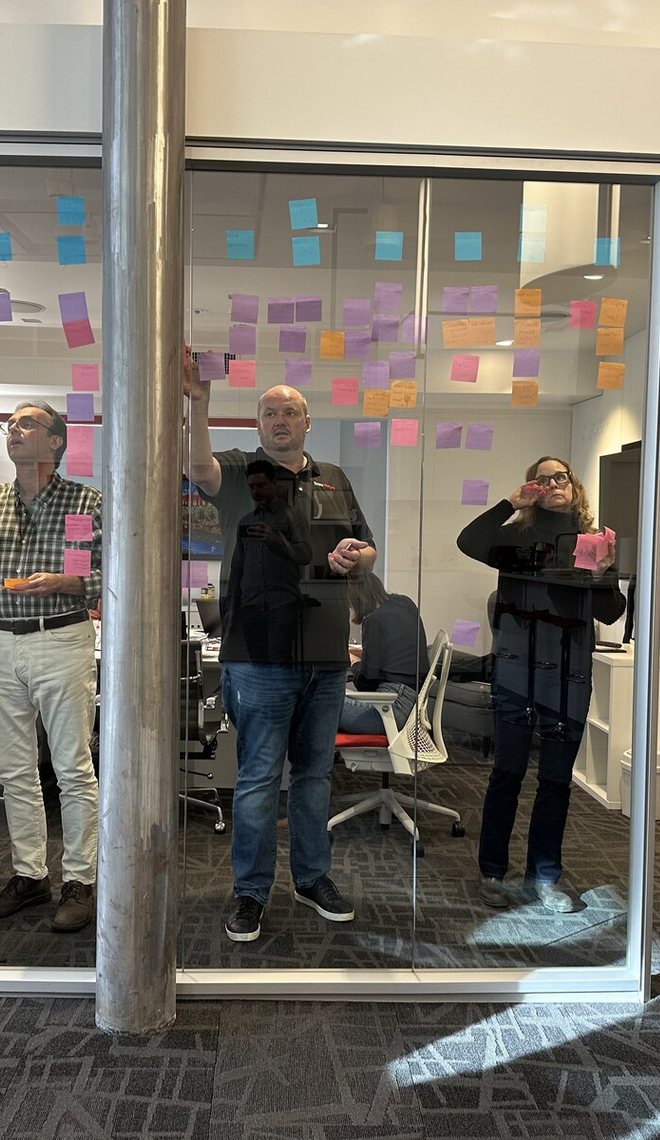
Leaders in discussion in a glass-walled meeting room
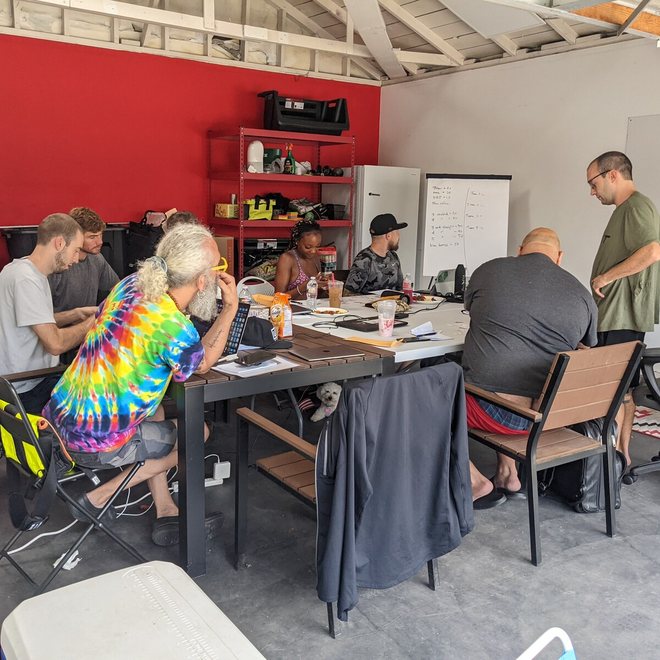
A team at work around a table
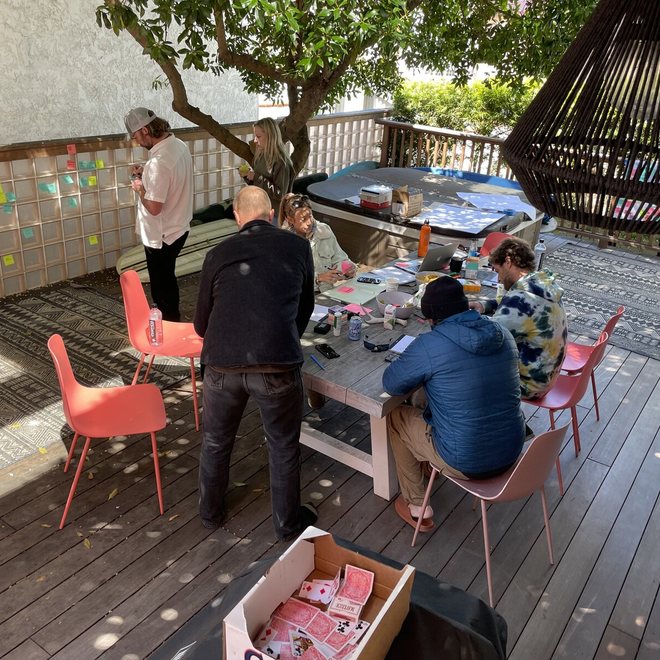
A small group working outdoors on a deck
The Problem
Most founders prepare the company and skip themselves, and that gap is where most post-exit regret comes from.
The Shift
From one job to two: a company a buyer pays a premium for, and a founder ready for the life after the sale.
Assessments
Two assessments, one for the company and one for you, each with 24 statements across six areas.
The Programs
VALUE10X prepares the company for a premium sale, and BLUEPRINT90 prepares you for the chapter after it.
Prepare Your Exit: The Shift

Two Jobs, Two Tracks.

The two jobs are separate pieces of work with separate timelines, and they need to run in parallel. One prepares the company for a buyer. The other prepares you for the years after the sale. Each has an assessment that scores where you stand today and a program that closes the gaps, and you can start on either side depending on which one is further behind.

Prepare the CompanyPrepare Yourself

Documented systems with real owners

Your finances and long-term security

A team that runs the work without you

A real reason for selling, not just an offer

Clean books and a forecast that holds up

The people who need to be part of the decision

Revenue that does not hinge on your relationships

A specific picture of the next chapter

Prepare Your Exit: What It Takes

Six Things a Buyer Pays a Premium For.

The instincts that built the company, being in every deal and every decision, are exactly what a buyer discounts. Most founder-led companies are worth less than they could be for one reason. The founder is the product. What a buyer pays a premium for is a business that runs on systems, and that comes down to six drivers they will scrutinize in due diligence.

01

Run on Documented Systems

Key processes have clear owners, written standards, and procedures people actually follow, so the business does not live in your head. A buyer is not asking whether the work gets done today. They are asking whether it still gets done the year after you leave.

02

Measure and Forecast

Dashboards, clean books, and a forecast that show performance and direction without you there to interpret them. Numbers that hold up do more than support the price. They shorten diligence, and a short diligence is a deal that stays on the rails.

03

Generate Demand Predictably

A repeatable system for prospecting, positioning, and selling that brings in business without you closing every deal. Revenue that traces back to a process is worth considerably more than the same revenue traced back to the founder's relationships.

04

Reduce the Dependence on You

A team that runs the business without you and a client base with no single account or segment large enough to sink the deal. Concentration is the risk buyers price hardest, and it is the one founders are most likely to have stopped noticing.

05

Plan and Execute in Rhythm

Quarterly priorities and weekly commitments that keep the company aligned and moving on its own. It shows a buyer that performance comes from an operating rhythm rather than from your attention, which is the thing they cannot buy.

06

Build a Culture That Lasts

Shared values, a real hiring system, and a bench of strong people, so the culture holds after you go. Buyers have watched acquisitions lose their best people in the first year, and they will look hard for whether yours is built to survive the transition.

Prepare Your Exit: What It Takes

Six Things You Need Before You Sign.

This is the job almost everyone skips. The exit is not just a transaction. It is the end of the thing that has defined your days for years, and no amount of money fills that in by itself. Founders who prepare their finances, their identity, their vision, and their people come through it well. The ones who do not are the three in four who regret it. Readiness comes down to six dimensions.

01

Secure Your Future

A clear plan for the proceeds, your long-term needs, and the safeguards around what you have built. Knowing your number before you hear an offer is what lets you evaluate one, rather than reverse-engineering a justification for whatever lands on the table.

02

Know Why You Are Selling

A real readiness to move on, with the sense that you have accomplished what you set out to, rather than a wish to be done. Buyers read the difference quickly, and so do you, usually somewhere around the second month of diligence.

03

Bring Your People In

Thinking through how the sale lands on your family, your partners, and your closest colleagues, and involving them before the decision is made. The exit changes their lives too, and finding that out afterward is a cost that shows up for years.

04

Loosen Your Grip

A life and an identity that are not entirely wrapped up in the business, so you can actually let it go when the time comes. Founders who cannot do this tend to find reasons the timing is wrong, right up until the option expires.

05

See What Is Next

A specific picture of your next chapter and why selling now serves it, not a vague plan to travel and think. The clearer that picture, the more precisely you can say what the exit has to deliver and what you will not trade away for it.

06

Resource the Process

The advisors, the plan, and the personal capacity to run a demanding sale without it running you. A sale process is a second full-time job on top of the one you have, and it lands during the months the company can least afford your distraction.

Prepare Your Exit: The Program

The Program for Preparing Your Exit.

VALUE10X is the core program for this stage. It builds the enterprise value a buyer pays for and clears the risks that discount the deal, on your timeline rather than a buyer's.

Business Exit Readiness Program VALUE10X

Will you exit on your terms or someone else's?

A buyer pays for the company you built, not the one you promise. VALUE10X builds enterprise value and removes the risks that discount the deal, long before you need to sell.

Duration
Matched to your exit window: a valuation assessment, a preparation roadmap, then implementation support on a six-month minimum.
Built for
Founder-CEOs planning to sell within 12 to 36 months who want the price to reflect what they built.
Method
Multiple valuation methods benchmarked against what buyers actually pay, then a roadmap that targets the drivers that move the multiple.
Outcome
A company worth more, less dependent on you, and ready for due diligence, so you sell from strength rather than pressure.

Looking for something else? BLUEPRINT90 is the founder side of the exit: your money, identity, people, and the life after the sale. Or explore all programs.

Prepare Your Exit: The Proof

Founders Who Built to Sell.

Over the past decade, founder-led companies have used this work to turn owner-dependent businesses into companies that run, and sell, on their own strength, and the founders behind them have used it to get ready for what came after. The pattern holds across technology, services, manufacturing, and professional services.

"Bruce possesses a rare ability to cut through the noise and identify the core issues that drive (or hinder) business valuation."
Norman RosenbergCEO, Lutron Shades
"His guidance was invaluable in helping me to develop a strategic approach to management and in refining the skills needed to run a large team through growth stage and acquisition."
Catherine-Gail ReinhardSVP, Brand Agency
"I've had the pleasure of working with Bruce as a strategic business coach and facilitator for over six years from early stage to over 1B valuation."
Sam KassoumehCo-founder, SecurityScorecard
"He has a unique ability to get right to the heart of an issue and extract practical solutions."
Ren TuckerCEO, Maverick
"What surprised me about working with Bruce was how quickly we got to core issues and root causes."
Kelly FaetaniniFounder and Designer, Kelly Faetanini
"One of Bruce's greatest strengths lies in his ability to help leadership teams articulate a clear and actionable strategy."
Dave DavisCFO
Prepare Your Exit: Common Questions

Questions Founders Ask About Exit Planning.

Straight answers on what exit planning involves, when to start, and why preparing the company and preparing yourself are two different jobs.

What is exit planning for a founder-CEO?

Exit planning is the work of preparing both the company and the founder for a sale, years before the deal. On the company side it means raising enterprise value and clearing the risks a buyer would discount. On the founder side it means getting clear on money, identity, people, and the life after the sale. Skipping either side is where most post-exit regret comes from.

When should I start planning my exit?

Start planning an exit three years before you want to sell, and no later than 12 months out. Value building takes time to show up in the numbers a buyer will pay for, and most drivers need several quarters of evidence before they read as durable. Founders who start early sell on their own timeline. Founders who start late usually sell on the buyer's.

How is exit planning different from working with a broker or M&A advisor?

Brokers and M&A advisors run the transaction: marketing the business, finding buyers, and negotiating terms. Exit planning happens before that and decides what the business is worth when it gets there. VALUE10X builds the value and the readiness a buyer pays for, so by the time an advisor takes the company to market, diligence questions are already answered.

What is the difference between VALUE10X and BLUEPRINT90?

VALUE10X prepares the company and BLUEPRINT90 prepares the founder. VALUE10X is for founder-CEOs selling within 12 to 36 months and focuses on enterprise value and deal risk. BLUEPRINT90 is a 90-day program that produces an Exit Blueprint for your identity, money, people, and the chapter after the sale. Many founders run both, because a ready company with an unready owner creates its own problems.

How do I know if my company and I are ready to sell?

Score both sides. The Business Exit Readiness Assessment scores the company on 24 statements across six value drivers, so you see what due diligence would turn up while there is still time to fix it. The Founder Exit Readiness Assessment scores you on 24 statements across six areas of personal readiness. Each takes about ten minutes and shows results instantly.

What does exit planning cost?

Investment depends on the company, the founder, and the scope of the work. Fit, scope, and numbers are covered on a strategy call, so the full picture is on the table before anything is committed. There is no proposal at the end of that call unless you ask for one, and both readiness assessments are free if you want data first.

Prepare Your Exit: Related Reading

Further Reading on Exit Planning.

Exit readiness is a recurring theme in the Inc.com column and on the blog. These pieces go deeper on what buyers pay for, what they discount, and the decisions that shape a sale long before the deal itself. Read more in the Inc.com column and on the blog.

Prepare Your Exit: Get Started

Two Ways to Start.

If you already know an exit is on the horizon, a strategy call is the fastest way to plan the runway. If you would rather see where you stand first, take one of the assessments.

Talk It Through

A working session on your exit, your timeline, and what it realistically allows, not a sales pitch.

  • Your timeline, and what it realistically allows
  • Which value drivers would move the price most
  • How ready you are for what comes after

You leave with a clearer read either way.

Score It Yourself

Ten minutes each. Score the business on what a buyer would pay for, or score yourself on readiness for life after the sale.

  • 24 statements each, scored instantly
  • No login and no email gate
  • Optional full report with next steps

Most founders take both, and the gap is the useful part.