Eckfeldt + Associates

Stage 1: Build Your Team

The Team That Got You Here, May Not Get You There.

What got you to this size will not carry you to the next. To scale past this point you need a leadership team that runs the business without you in the room, with the right people in the right seats and clear accountability. Building that team is its own job, and it is not the one that got you here.

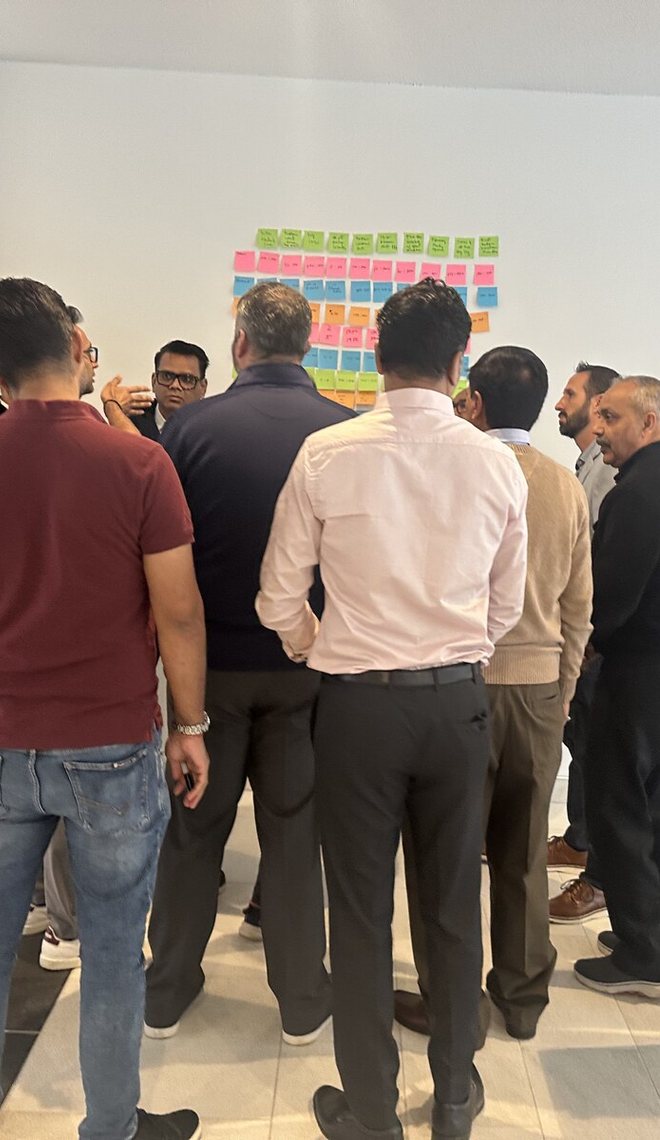
A leadership team gathered in discussion
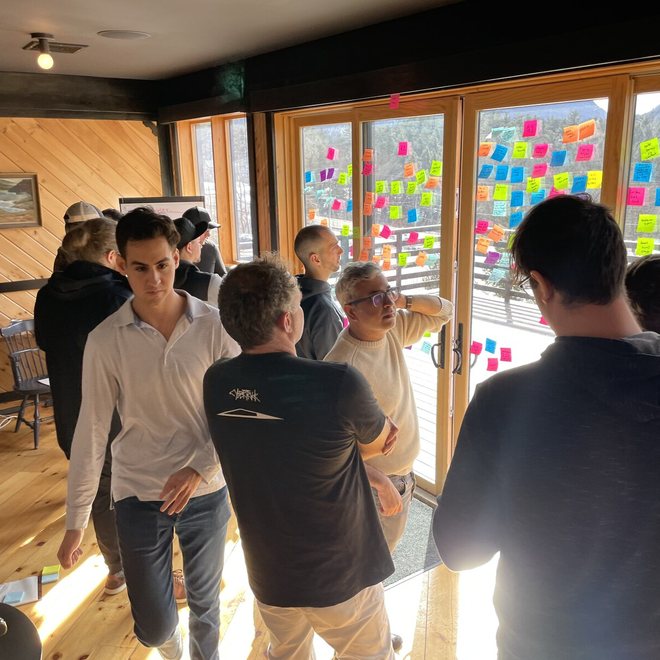
A team gathered in conversation
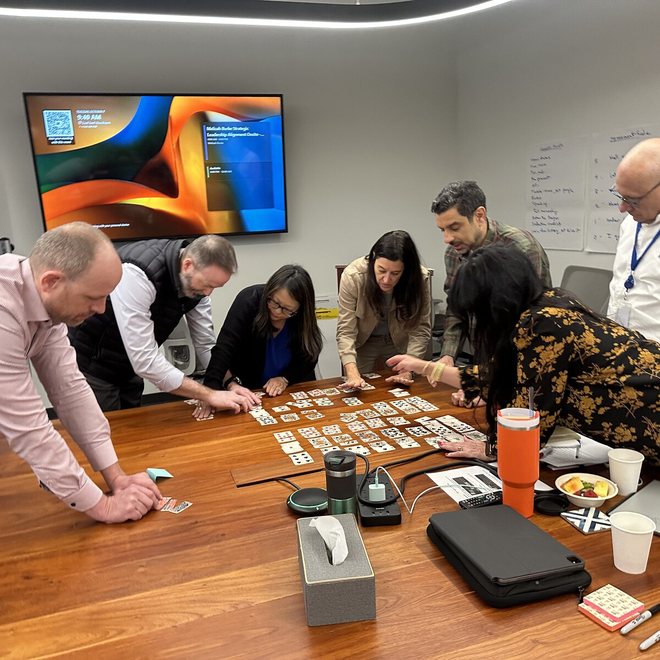
Leaders working through a card exercise
The Problem
A group of strong managers who each run their own lane, with the founder still holding the handoffs between them.
The Shift
From loyal functional doers to enterprise leaders who own outcomes, decide together, and hold each other accountable.
The Assessment
The Team Readiness Assessment scores your leadership team on 24 statements across six areas in about ten minutes.
The Programs
LEADERSHIP360 rebuilds the team around your strategy, NEXTLEVEL coaches you through the shift, and ALIGN90 aligns partners.
Build Your Team: The Shift

Good Managers Don't Guarantee a Great Team.

This is not about your people being wrong. They are talented, and they got you here. But a group of strong individual managers is not a high-performing leadership team, and the gap between the two is what quietly caps your growth. Scaling the team takes different habits and accountabilities than getting here did.

A Group of ManagersA Leadership Team

Loyalty and Tenure

You kept the people who were there from the start. They earned their seats by showing up early and staying through the hard years, and that history makes the seat feel permanent.

Evidence and Fit

Decisions get made on objective data about capability and fit, not history. Tenure still counts for something, but it stops being the argument that ends the conversation.

Functional Doers

Strong department heads who run their own lane, heads-down. Each one is good at their function, and managing the handoffs between them is your job.

Enterprise Leaders

Leaders who think across the whole business, not just their function. They come to the table with the company problem in mind rather than a defense of their own department.

Gut-Feel Calls

You size people up by instinct and read the room. It worked when you knew everyone personally and could watch most of the work happen.

Objective Assessment

Behavioral and cognitive data on who belongs in which seat. Instinct still gets a vote, but it is checked against something you can put on a table and discuss.

Founder as the Glue

You hold the team together and fill every gap yourself. Nothing falls through, because you are the one catching it before it lands.

Clear Accountability

Defined roles and scorecards so the team holds itself together. Gaps get named and owned rather than quietly absorbed by whoever noticed first.

Keeping the Peace

You smooth tensions and work around the hard conversations. The team stays comfortable, and the issues that actually matter stay unsaid.

Productive Conflict

A team that surfaces the real issues, settles them, and commits. Disagreement happens in the room and ends in a decision everyone backs outside it.

Build Your Team: What It Takes

Six Things a Great Leadership Team Can Do.

A high-performing leadership team is not just talented people. It is a group that can do a specific set of things together, consistently, without you driving every one. These six capabilities separate the teams that scale from the ones that stall, and they are exactly what the Team Readiness Assessment measures.

01

Decide From Shared Values

They agree on what the team stands for and use those values to make the hard calls, not just to hang them on a wall. When a decision is close, the values break the tie rather than the loudest voice in the room, and everyone can say what the tiebreak was.

02

Know Who Owns What

Every seat has a scorecard. Each leader knows their responsibilities, their numbers, and how their role connects to the others, so work does not fall between two people who each assumed the other had it, and nobody has to ask who owns a decision.

03

Make Decisions That Stick

There is a clear process for who has input, who decides, who approves, and who is informed. Decisions get made, they hold, and nobody relitigates them in the hallway a week later. The process is agreed once, not per decision.

04

Have the Hard Conversations

They debate the substance without it turning personal. Everyone is heard, and disagreement ends in a decision the whole team supports in public, whatever they argued for in the room. Silence is treated as a problem, not consent.

05

Hold the Line on Commitments

People take ownership, track what they committed to, and hold each other to it in a way that is direct and still supportive. Accountability runs sideways across the team rather than through you, which is what makes it hold when you are not in the room.

06

Run on Shared Metrics

The team has a clear set of KPIs that define success, reviews them on a regular cadence, and uses the review to get better rather than to assign blame for the number that missed. Everyone sees the same numbers at the same time.

Build Your Team: What It Takes

Great Founders Hustle, Great CEOs Lead.

The job you have now is not the job you started with. As a founder you win on hustle and doing the work yourself. The CEO job is different, setting direction, building systems, and leading through other people. Every founder-CEO has to make that shift, and most make it late, after the cost of not making it is already showing up in the numbers.

01

Focus

As a founder you win on execution. You are in the work, and the company moves because you move it. The CEO job is strategy, deciding where the company is going and what it will not do to get there.

02

Impact

Founders make impact through results, chasing this quarter's wins. CEOs make impact through systems that produce results without them. The shift is from closing the gap yourself to building the thing that closes it.

03

People

Founders manage. You tell people what to do and check the work, which is right when the standard lives in your head. CEOs lead, setting direction and holding people to outcomes rather than steps.

04

Culture

Early on you create culture by presence. People absorb the values by watching you work, and that carries a company a long way. Past that the job is evolving culture deliberately and building it into how you hire and promote.

05

Sales

Founders sell. You are the rainmaker, you close the deals, and the relationships are yours. CEOs build marketing, meaning channel strategy, partnerships, and a salesforce that wins without you in the room.

06

Financial

Founders watch cashflow. You know the balance, you manage expenses, you make payroll. CEOs allocate capital, deciding where money goes to earn a return and managing the relationships that fund it.

Build Your Team: The Program

The Program for Building Your Team.

LEADERSHIP360 is the core program for this stage. It works on the leadership team as a whole: the seats, the accountability, and the rhythm that let the business run without you in every decision.

Leadership Team Program LEADERSHIP360

Does every decision still run through you?

Your company has outgrown what one person can hold. LEADERSHIP360 builds the leadership team, the accountability, and the operating rhythm that let the business run without you in the room.

Duration
In 90 days and five stages, LEADERSHIP360 evaluates the current team, clarifies roles and responsibilities, and builds a culture of accountability across the organization.
Built for
Founder-CEOs and their leadership teams at growth-stage companies.
Method
Behavioral and cognitive assessments, team surveys, and one-to-one interviews with every leader.
Outcome
The right people in the right seats, clear accountability for every key role, and a team that runs the business without routing every decision through you.

Looking for something else? NEXTLEVEL is one-to-one executive coaching for the founder at the center of the team, and ALIGN90 is partnership coaching for co-founders and business partners. Or explore all programs.

Build Your Team: The Proof

Teams That Made the Shift.

Over the past decade, dozens of founder-led companies have made this exact shift, across technology, services, manufacturing, and professional services. The pattern holds everywhere. It is rarely about finding more talent. It is about the right people in the right seats, with the accountability to perform at the next level.

"This open communication directly translated into enhanced team performance, with individuals stepping up and taking greater ownership of their roles."
Paige ByrdCo-President, Thiel and Team
"His facilitation skills are equally impressive, fostering an environment of collaboration and buy-in, which is crucial for aligning our team around a shared vision."
Sam KassoumehCo-founder, SecurityScorecard
"These tools, coupled with his facilitation expertise, ensured our leadership team was aligned and equipped to translate vision into action."
Paul RicciCEO, Best Egg
"His approach created a safe space for addressing difficult topics, allowing us to have candid, necessary discussions that strengthened our alignment as a leadership team."
Mario IgnazzitoChief Product Officer, Dedagroup North America
"As a result, our leadership team left the session much more aligned, energized, and equipped with a road map for the future."
Troy PrinceFounder, Wall Street Bound
"In a short time the newly formed product organization is working much better as a coherent team and in more efficient ways to bring their products to market."
Lori BlickensderferCDO and CTO
Build Your Team: Common Questions

Questions Founders Ask About Leadership Team Building.

Straight answers on what leadership team building involves, when it is worth doing, and how it differs from coaching one person at a time.

What is leadership team building for a founder-led company?

Leadership team building is the work of turning a group of strong functional managers into a team that runs the business together, without the founder holding every handoff. It covers who sits in which seat, how decisions get made, how accountability works between peers, and how the team owns the strategy instead of just executing its own lane. The result is a company that keeps moving when the founder is out of the room.

How do I know my leadership team is the constraint on growth?

The clearest sign is that decisions still route through you. Other signs are managers who defend their own function instead of the whole business, issues that surface in one-on-ones but never in the team meeting, and a plan that stalls between departments. The Team Readiness Assessment scores the team on 24 statements across six capabilities in about ten minutes, which is a quick way to see where the gaps sit.

When is the right time to invest in leadership team development?

The right time is before the team becomes the bottleneck, usually when the company has outgrown a founder who can see and touch everything. Growth stalls, good people get stretched past their role, and the founder ends up mediating between functions. Starting early means the team is ready for the next stage of growth instead of catching up to it, and it is far easier than rebuilding a team under pressure.

How is this different from executive coaching or EOS implementation?

Executive coaching works with one leader at a time, and EOS implementers install a fixed operating system. Leadership team building works on the team as a unit: seats, decision rights, accountability between peers, and alignment on strategy. LEADERSHIP360 uses behavioral and cognitive data to put the right people in the right seats, and NEXTLEVEL adds one-to-one coaching for the founder through the shift from doing to leading.

How long does it take to build a leadership team that scales?

The core work runs about 90 days. LEADERSHIP360 is built as a 90-day program that resets seats, roles, and accountability around the strategy, and the habits it installs keep compounding after that. Most teams see the change first in their meetings, where real disagreements start surfacing and decisions stop waiting for the founder.

What does leadership team development cost?

Investment depends on the size of the team and the scope of the work. Fit, scope, and numbers are covered on a strategy call, so the full picture is on the table before anything is committed. There is no proposal at the end of that call unless you ask for one, and the Team Readiness Assessment is free if you want data first.

Build Your Team: Related Reading

Further Reading on Leadership Team Development.

Leadership team development is a recurring theme in the Inc.com column and on the blog. These pieces go deeper on team composition, role clarity, accountability, and the decisions that shape a leadership team as the company grows. Read more in the Inc.com column and on the blog.

Build Your Team: Get Started

Two Ways to Start.

If you already know the team is the constraint, a strategy call gets straight to it. If you would rather see where you stand first, an assessment is the lighter way in.

Talk It Through

A focused conversation about your leadership team, where it is holding the business back, and what to do first. No proposal at the end unless you ask for one.

  • Where the team is the constraint today
  • Which seats and roles to address first
  • Whether LEADERSHIP360 fits, and when

No proposal at the end unless you ask for one.

Score It Yourself

Ten minutes, 24 statements, and an instant read on where you stand. No login and no email gate.

  • 24 statements each, scored instantly
  • No login and no email gate
  • Optional full report with next steps

Most founders take both and compare the results.