Every Voice Heard First
Every participant gets a confidential conversation before the design starts. The issue nobody would raise in front of the others surfaces there, and it is usually the one worth the time away.
DEEPDIVE: Retreat Facilitation
DEEPDIVE is retreat facilitation for leadership teams, forums, and CEO groups who need to work something out together. It starts with a confidential conversation with everyone in the room and ends with decisions that have owners and dates.
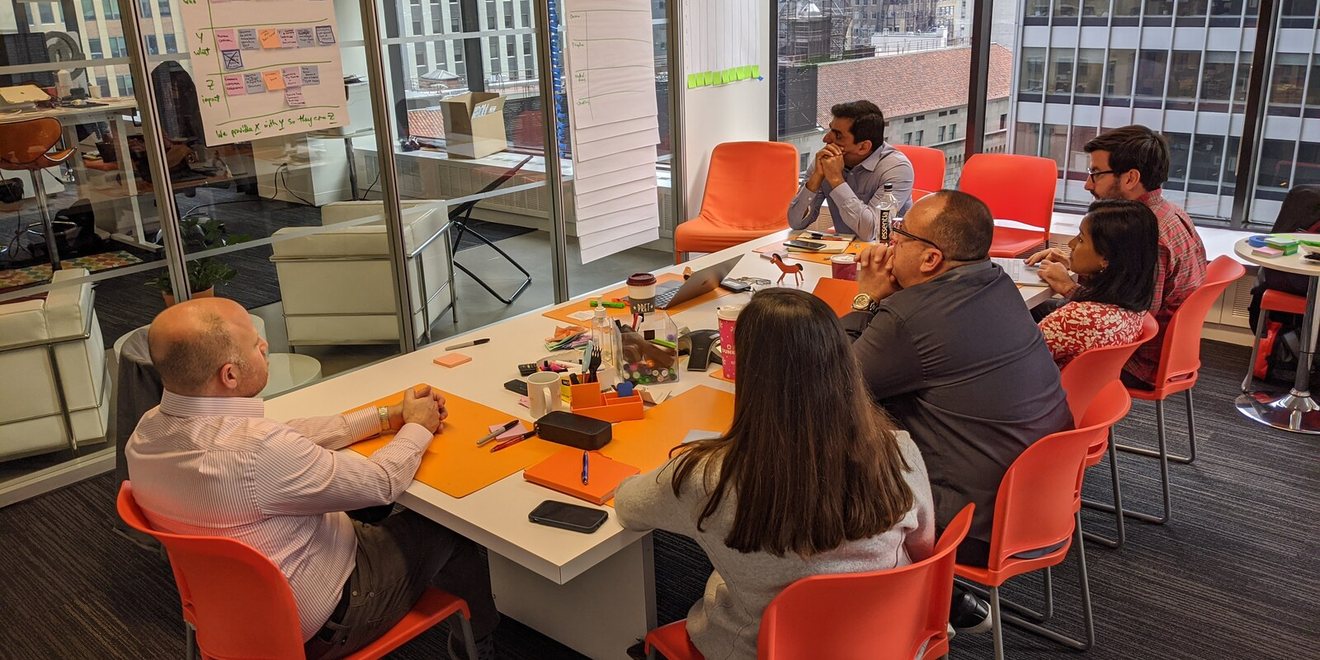
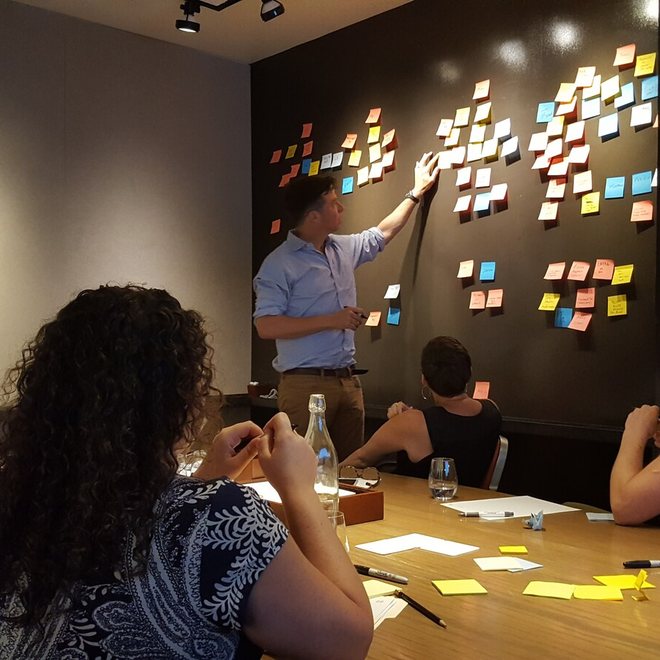
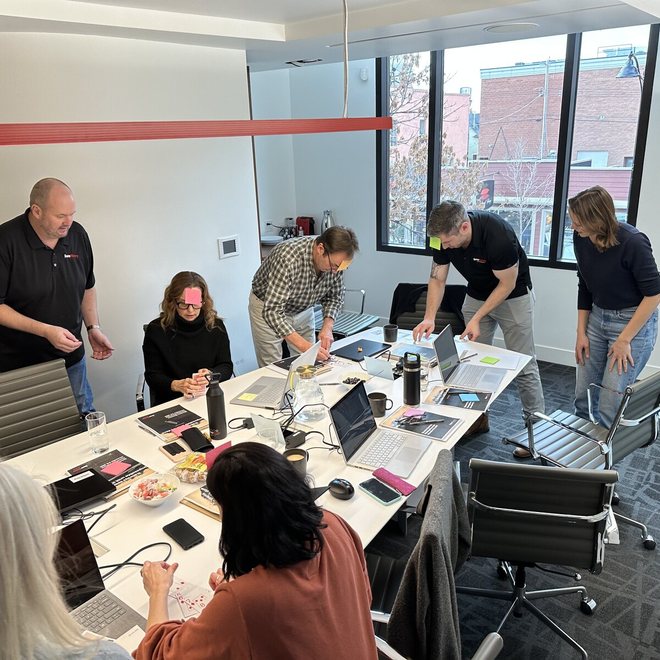
DEEPDIVE is a designed and facilitated retreat that starts from what the group actually needs to resolve, not from a standard agenda. It is the working session of the Clarify Your Strategy stage.
Every participant gets a confidential conversation before the design starts. The issue nobody would raise in front of the others surfaces there, and it is usually the one worth the time away.
Nothing comes off a shelf. The agenda, the exercises, and the facilitation approach are designed around what the group needs to resolve, whether strategy, structure, culture, or alignment.
Distance from the daily operation is what makes the depth possible. Time away and outside facilitation enable the honest dialogue that never happens between two meetings.
Discussions get driven toward outcomes instead of circling. Hard conversations get navigated rather than avoided, quiet people get drawn in, and the group actually decides things.
Every agenda item ends with a decision, and every commitment carries a name and a date. The group leaves with a written plan to execute, not a recap of what was said.
A debrief reviews the commitments and follow-up sessions work through implementation, so what the group decided is still standing when the quarter gets busy again.
DEEPDIVE works for leadership teams, peer groups, and forums that bring the same problem. A group of senior people needs to be honest about something the normal meeting rhythm is not built to handle.
It surfaces in every meeting, gets ten minutes, and gets deferred again. Nobody has set aside the time to work it all the way through, so it keeps coming back with a little more frustration attached each time. That pattern is the clearest sign a group needs dedicated time.
Something real sits under the agenda and never gets named. Everyone knows what it is and nobody wants to be the one to say it out loud, so the meetings stay polite and the real issue stays exactly where it was. An outside facilitator can bring it into the room safely.
A new market, an acquisition, or a restructure is on the table. The choice needs the whole leadership team in one room, thinking at full depth, not a subset squeezing it into the end of a regular meeting and leaving the rest of the team to second-guess it afterward.
New hires, remote work, or a merger has left a group that works alongside each other without really knowing how the others think and decide. Collaboration suffers in small ways every week, and nobody can quite name why until the differences are made visible.
Meetings run on logistics rather than the conversations people joined for, and the structure that used to work has stopped serving the group. Members still show up, but the depth that made the forum worth it has faded, and nobody inside the group can reset it alone.
The days were good and nothing changed. There was no plan attached to the energy and nothing afterward to carry it, so a month later the group was back where it started. The difference next time has to be decisions with owners and a structure that follows the group home.
The return shows up in two places at once. There is what happens in the room, which is the part people feel, and there is what survives the return to ordinary operations, which is what pays for the time away.
Direction gets clarified and deferred decisions get made, so whatever the group came in to work on is what actually gets worked.
Decisions, initiatives, owners, and timelines in a form the team can work from, so the group leaves with a plan to execute, not a recap.
Every commitment carries a name and a date, so progress becomes checkable rather than dependent on who happens to remember what.
Insights, frameworks, and agreements captured clearly, so the alignment holds once daily operations start competing for attention again.
A debrief and follow-up sessions work through implementation problems and hold the momentum on what the group committed to in the room.
Tensions get surfaced and addressed rather than carried home, and enough safety gets built that the candor continues after the retreat.
The group learns how each person thinks and decides, and collaboration improves because the differences are finally visible to everyone.
Each item on the agenda ends with a decision, so nothing important lands back in the pile of things to look at later or next quarter.
The interviews, design, logistics thinking, and follow-up are all handled, so nobody inside the group runs the retreat on top of their job.
When the days produce real decisions and real connection, the group comes back to the next one ready to work rather than ready to coast.
DEEPDIVE was created by Bruce Eckfeldt, a strategic business coach and facilitator for leadership teams and forums. He designed it from years of running strategy retreats and leading EO forum and accelerator work.
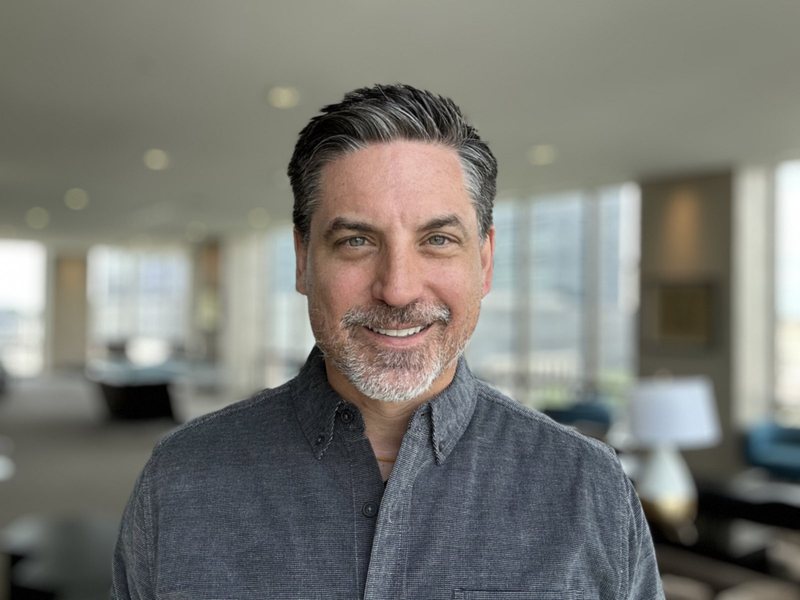
Founded a Lean/Agile software agency in 2003, led it through five consecutive years on the Inc. 500/5000 list, and exited via acquisition in 2013. The work draws on building a leadership team from the inside, not on theory.
Certified in Scaling Up, Metronomics, the Predictive Index, and exit planning (CEPA), with Lean/Agile roots and Flow Research Collective training. The right tool gets fitted to the company, not the company to the tool.
A decade as CEO of the agency, then fractional CEO and COO roles for high-growth businesses, then a coaching practice built on dozens of founder-CEO engagements. Every stage of the climb is familiar ground.
The days in the room are the middle of the engagement, not the whole of it. What makes them work is everything that happens first, and what makes them stick is what happens after. All of it is included.
Every participant gets a confidential conversation: what the group says it is here to do, what it is actually stuck on, how the people in it work together, and what nobody is willing to raise in front of the others. The objective for the retreat gets set from what those conversations reveal.
What the group needs, what it cannot do, and what it will not say yes to. Budget, calendars, travel realities, physical needs, and the political limits that shape what can go on an agenda all get mapped, so the design works inside the real world rather than an ideal one.
Where the group should be and what that setting has to support. Venue characteristics, room layout, timing, and the arrangements that decide whether the environment carries the work or fights it. Booking and paying for hospitality sits outside the fee and is quoted on request.
The agenda, the exercises, and the arc of the days get designed against the objective. Every retreat follows the same arc of opening, working, and landing, with the difficult conversation deliberately placed rather than left to chance or squeezed into the last afternoon.
Pre-reads, surveys, and assignments go out ahead of time, so the room arrives ready to work. The group skips the first morning of getting to a shared starting point and spends the time on the issue it came to settle, which is where the value of the days actually sits.
The retreat itself, guided throughout and adjusted in real time, ending with decisions that have owners and dates. Afterward come documented decisions, a debrief to review the commitments, and check-ins that hold the momentum once ordinary operations start competing for it.
These are leadership teams, executives, and forum members describing retreats and strategy offsites in their own words, across corporate leadership teams, startup planning offsites, and EO forum work.
"Bruce demonstrated a unique ability to engage our leadership team in conversations that were both challenging and productive, helping us move from scattered priorities to a crystal-clear strategic direction."
"By the end of the retreat, the entire team felt energized and clear on our future direction."
"He created a safe space where we could address the structural challenges head-on while simultaneously taking us deeper into the kind of sharing that makes forum so valuable."
"We left with crystal-clear priorities, a detailed execution roadmap, and most importantly, genuine alignment across our functional areas."
"He interviewed each of us individually, reviewed our business context, and arrived at the retreat with a deep understanding of our challenges, strengths, and opportunities."
"If you're looking for someone who can cut through the noise, facilitate essential conversations, and help your team develop a clear, actionable strategy, I highly recommend working with Bruce."
The answers are straight, including the practical ones about length, location, and who should be in the room. If a question is not covered here, bring it to the strategy call.
DEEPDIVE is a designed and facilitated retreat for leadership teams, forums, CEO groups, and project teams. It runs end to end. Confidential interviews with every participant, requirements and logistics worked out, an agenda and experience designed against the objective, prep work distributed, facilitation across the engagement, then documentation, a debrief, and follow-up. The output is a plan with owners and dates, not a summary of the conversation.
The agenda is the difference. A self-run offsite gets built from what people suggest, which reliably leaves out the hardest topic, because the person who would raise it is sitting in the room. Interviews surface that before anyone arrives. The other difference is that nobody inside the group has to choose between participating in the conversation and steering it, which is a trade the most senior person usually loses.
That follows from what the group has to leave having settled, which is why the length is set during design rather than quoted up front. A single tightly framed decision needs far less time than a full strategic reset, and a group that has to surface something difficult before it can decide anything needs more than either. The recommendation comes after the interviews, when the real scope is visible.
Everyone whose agreement the outcome depends on, and nobody whose presence would stop the group being honest. For a leadership team that usually means the whole team rather than a subset, because decisions made by half a team get relitigated by the other half. Groups run up to twelve people comfortably. Above that, the design changes and gets scoped individually.
Working out what the setting has to support is part of the design, covering location characteristics, room layout, timing, and the arrangements that determine whether the environment carries the work. Booking and paying for the accommodations, menus, travel, and comparable hospitality sits outside the engagement and is arranged and quoted separately. Most groups either have a venue in mind or want help finding one, and both work.
Yes, and forum work is a regular part of the practice. The structural issues are different, covering protocols, meeting structure, and how a group creates the conditions for real depth rather than logistics. The mechanics of the engagement are the same. Interviews first, facilitation toward decisions, documented outcomes afterward, so the group leaves with an agreed way of operating rather than a discussion about one.
Everything decided arrives documented, in a form the group can work from rather than a transcript. A debrief session reviews the commitments and clarifies the next steps. Follow-up check-ins hold momentum on the implementation and give the group a place to work through what turns out to be harder than it looked. That follow-up is part of the engagement, not an add-on.
Investment is a fixed fee covering the interviews, the design, the facilitation, and the follow-up rather than an hourly arrangement, and it scales with the length of the engagement. Group size and hospitality arrangements affect scope separately. Fit, length, and numbers all get covered on the strategy call, so the full picture is on the table before anything gets committed.
Planning, alignment, and productive conflict are recurring themes in the Inc.com column and on the blog. These pieces go deeper on what a group needs to settle and how teams decide well together. Read more in the Inc.com column and on the blog.

A disciplined quarterly planning process aligns the team and speeds up strategic execution.
Read the article
Teams that engage in constructive debate outperform those that avoid conflict.
Read the article
Goals without a strategy go nowhere. Strategy defines the path that gets you to the goal.
Read the article
Most leadership teams judge decisions by outcomes. Hindsight bias makes that judgment worse, not better.
Read the postWhen teams put politeness ahead of productive conflict, the real debates move to the hallway.
Read the postTeams assume shared values until a hard decision shows they disagree about what really matters.
Read the postBring the group as it actually is, including the topic that keeps getting deferred. Coming before the group has agreed to anything is normal, and most engagements start with one person working out whether it is worth proposing.
Fill out a short form to request a strategy call. It takes a couple of minutes, and there is no screening call in front of it. Bring the problem that is loudest right now, whether that is an issue that keeps getting deferred, a big decision the whole team needs to make, or a forum that has stalled.
You get a few specific questions ahead of time, so the call opens on the actual problem instead of thirty minutes of orientation. Short answers are enough, and rough notes work fine. The point is to arrive with the real situation on the table: who the group is, what it needs to leave having decided, and what has been tried before.
You work the topic directly on video. Expect to be pushed on your reasoning: that pressure is the point. The conversation tests what you believe about your group against what the evidence says, and it surfaces the questions that keep getting put off. The goal is a sharper read before the call ends.
You get a written follow-up with a read on the problem, what to do first, and the concrete next steps. If DEEPDIVE is the right fit, the follow-up says so and explains why. If it is not, it says what is, whether that is ROADMAP12 or another program. Either way, you leave with something useful.