Eckfeldt + Associates

Stage 2: Clarify Your Strategy

Is Your Business Really Ready to Grow?

Growth exposes every weak system you have. To scale cleanly you need more than ambition. You need a clear business growth strategy, a high-performing leadership team, the right priorities, and the discipline to execute them quarter after quarter. That is what separates companies that scale from companies that stall.

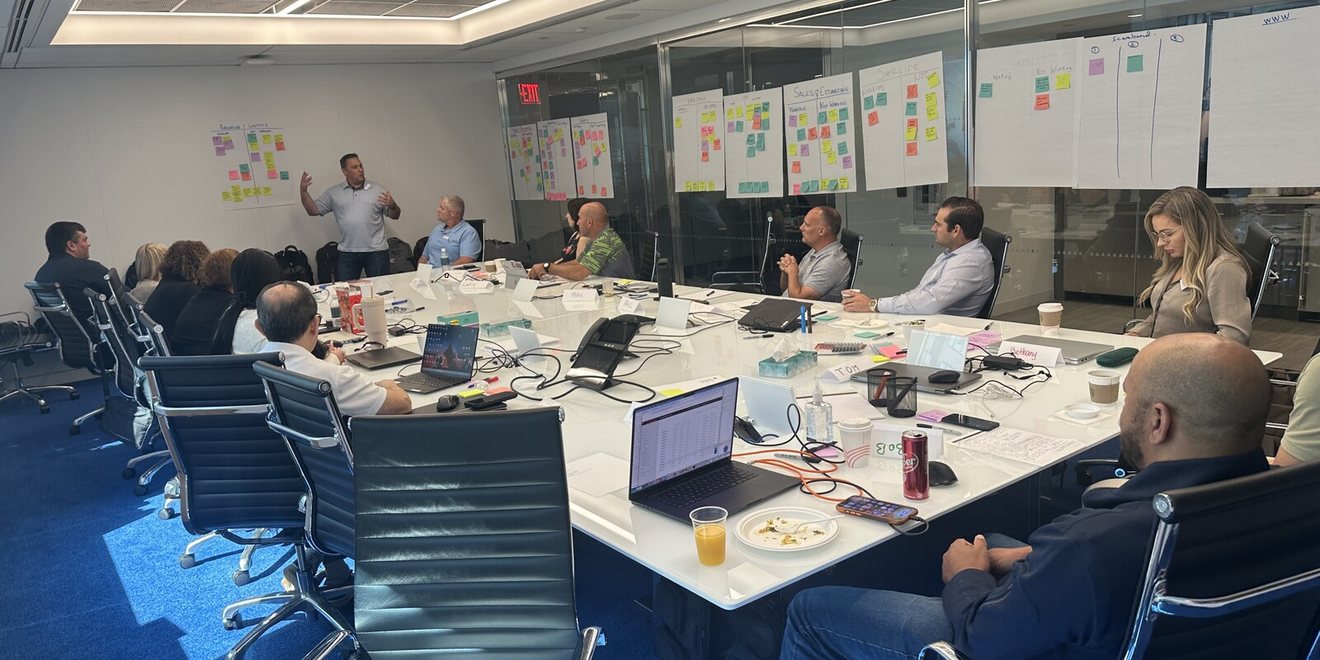
A leadership team in a planning session with plans posted on the walls
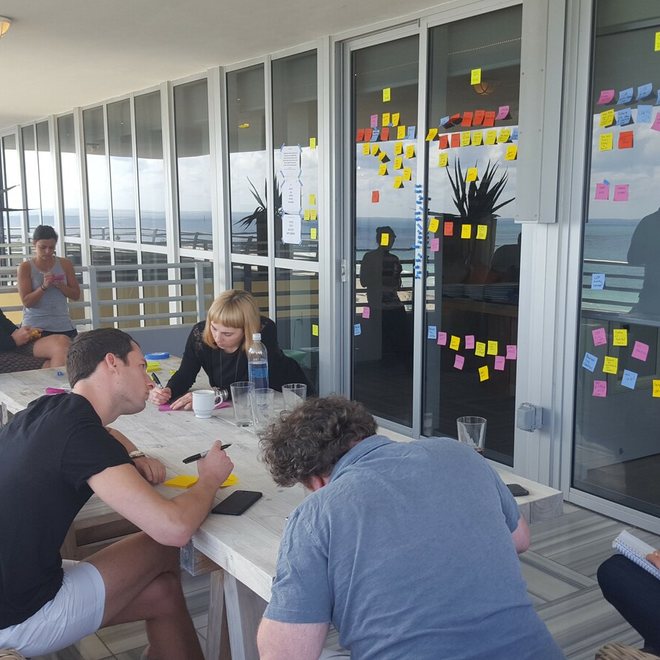
A team at work in a planning session
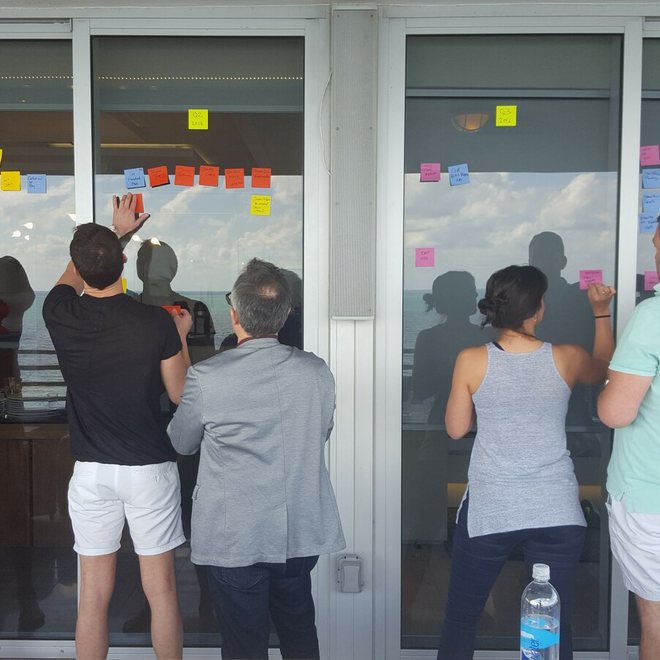
Leaders working at a window wall of notes
The Problem
A business that still runs on effort and the founder's heroics, with a revenue target standing in for a strategy.
The Shift
From pushing harder to a real strategy: clear choices about where you play, and a quarterly rhythm that runs it.
The Assessment
The Growth Readiness Assessment scores your company on 24 statements across the six drivers of scaling.
The Programs
ROADMAP12 builds the strategy and the rhythm that runs it, and DEEPDIVE facilitates the retreats that set direction.
Clarify Your Strategy: The Shift

You Don't Have a Growth Problem. You Have a System Problem.

When growth stalls, the instinct is to push harder, sell more, hire faster. Past a certain size the constraint is rarely effort. It is that the business still runs on you and a handful of heroics instead of systems. Scaling a business takes a different operating model than the one that got you where you are now.

Running on EffortRunning on Systems

Founder Heroics

You and a few key people carry the load and fill every gap. It worked when the company was small enough for you to see everything. Past that point, the gaps multiply faster than you can catch them.

Repeatable Systems

Documented processes that produce the result without you in the room. You still set the standard, but it lives in the system rather than in your head, so it survives your calendar.

Reactive Firefighting

You chase whatever is loudest this week. The urgent things are real and handling them feels like progress, which is exactly why the important ones keep sliding to next quarter.

Clear Priorities

A ranked set of priorities the whole team is working toward. Urgent things still land, but they get triaged against the plan instead of quietly replacing it.

Growth by Adding

More people, more products, more markets. Every addition looked reasonable on its own, and together they built a business that is harder to run than it is to grow.

Growth by Focus

A differentiated strategy with the discipline to say no to most things. Growth comes from doing fewer things for a narrower customer, which is the opposite of what got you here.

Chasing the Puck

Planning reacts to where things are today. You respond well to what the market does, and that works right up until responding is the entire plan.

Skating to Where It Is Going

Long-term planning built on a read of where the market is heading. You still adapt, but from a position you chose in advance rather than one the market chose for you.

Gut-Feel Numbers

You sense how the business is doing, and you are usually right. The problem is that nobody else can see what you see, so nobody else can act on it.

Managed Metrics

Scoreboards and KPIs the team watches together. Instinct still gets a vote, but it is checked against numbers everyone can see and argue with.

Clarify Your Strategy: What It Takes

Six Things Every Real Growth Strategy Has.

Most companies do not have a strategy. They have a revenue target and a lot of activity. A strategy is a set of choices about where you play, who you serve, and what you will be excellent at, which means it is also a set of choices about what you will not do. These are the six pieces that have to be there.

01

A Prediction About the Market

Strategy starts with a prediction, not a target. Read the market, industry, and macro trends and extrapolate them forward. Skate to where the puck is going, because a plan built on where things sit today is already late.

02

A Core Customer Actually Chosen

Not a segment description that includes everyone. Look at who you are most profitable serving, who is easiest to serve, and who refers you, then build around the ones that rise to the top and stop watering down the rest.

03

An Honest Competitive Read

Map the real alternatives your buyer weighs, including doing nothing, against the attributes they actually decide on. Most teams guess at this rather than look, and position against a competitor the customer never considered.

04

Attributes You Win On

Pick the handful of buying attributes that matter most to that customer and be genuinely excellent there. Be willing to be average, or bad, everywhere else. Name the prospects, products, and markets you are not chasing.

05

Capabilities That Back the Choice

The processes, policies, and activities that reinforce the position. Value comes from how they fit together rather than from any single one, which is what makes a real strategy hard to copy and a borrowed one hard to run.

06

A Cadence That Sustains It

Annual, quarterly, monthly, weekly. Strategy is a process the leadership team runs, not a document it approves once and files. The best thinking in the world is worthless if nobody returns to it after the offsite.

Clarify Your Strategy: What It Takes

Six Drivers of a Business That Scales.

The elements above are the strategy itself. Running it takes a business that is strong across six drivers at once. A gap in any one shows up as friction, missed targets, or a business that leans too much on you. These six are exactly what the Growth Readiness Assessment measures.

01

Guided by Purpose and Values

A clear purpose, core values, and a long-term goal that guide the hard decisions rather than hang on a wall. When a call is close the values break the tie, and when an opportunity does not fit, saying no gets easier.

02

Right People, Right Seats

Role scorecards, development plans, and regular talent reviews, so the right people own the right work. Every seat has a number attached, which means performance conversations start from evidence rather than from feel.

03

Differentiate and Focus

A strategy everyone can state, a clear core customer, and the focus to say no to everything else. The test is whether your team gives the same answer when asked who you are for, because the front line makes that call daily.

04

Run on Documented Systems

Core processes documented and followed, bottlenecks named, and daily KPIs everyone can see. The company stops depending on what lives in a few people's heads, so growth stops revealing a new gap every time you add volume.

05

Fund the Growth

Clean books, a rolling cash forecast, and capital aimed at the highest-return moves. You know which parts of the business fund the rest, and you see a cash problem far enough ahead to solve it rather than react to it.

06

12-Quarter Strategic Roadmap

A long-term goal, an annual plan, and 90-day priorities with clear accountability, all on the calendar. Planning runs on a rhythm rather than when someone remembers, so each quarter opens with a review instead of a debate.

Clarify Your Strategy: The Assessment

See Where Your Business Stands.

The Growth Readiness Assessment scores your company across those six drivers and shows you exactly where you are ready to grow and where you are exposed. It takes about ten minutes, and you get your scores the moment you finish. It is the fastest way to turn the list above from an idea into a read on your actual business.

Clarify Your Strategy: The Program

The Program for Clarifying Your Strategy.

ROADMAP12 is the core program for this stage. It builds the twelve-month plan, the few priorities that matter, and the quarterly rhythm that keeps the whole team executing the same strategy.

Strategic Planning Program ROADMAP12

Is everyone busy but the business stuck?

Activity is not progress. ROADMAP12 gives you a clear twelve-month plan, the few priorities that actually matter, and the cadence to keep the whole team executing the same strategy.

Duration
Twelve months: seven weeks of discovery, a three-day strategy intensive, then quarterly planning sessions that keep the roadmap current.
Built for
Founder-CEOs and their leadership teams at a growth inflection point, with a team in place and priorities that have gotten scattered.
Method
A leadership survey, a one-to-one prep call with every leader, a facilitated three-day intensive, and a quarterly planning rhythm.
Outcome
A 10-year vision, a three-year target, sharp positioning, and a 12-quarter roadmap where every priority has an owner and a number.

Looking for something else? DEEPDIVE runs focused retreats for leadership teams and CEO groups that need to set direction together. Or explore all programs.

Clarify Your Strategy: The Proof

Founders Who Found Their Focus.

Over the past decade, dozens of founder-led companies have used this work to turn scattered effort into a clear, executable strategy, across technology, services, manufacturing, and professional services. The pattern holds everywhere. Focus beats hustle once you are past a certain size.

"One of Bruce's greatest strengths lies in his ability to help leadership teams articulate a clear and actionable strategy."
Dave DavisCFO
"This sense of focus and direction was incredibly empowering for me and my leadership team."
Norman RosenbergCEO, Lutron Shades
"These tools, coupled with his facilitation expertise, ensured our leadership team was aligned and equipped to translate vision into action."
Paul RicciCEO, Best Egg
"As a result, our leadership team left the session much more aligned, energized, and equipped with a road map for the future."
Troy PrinceFounder, Wall Street Bound
"His facilitation skills are equally impressive, fostering an environment of collaboration and buy-in, which is crucial for aligning our team around a shared vision."
Sam KassoumehCo-founder, SecurityScorecard
"In a short time the newly formed product organization is working much better as a coherent team and in more efficient ways to bring their products to market."
Lori BlickensderferCDO and CTO
Clarify Your Strategy: Common Questions

Questions Founders Ask About Business Growth Strategy.

Straight answers on what a business growth strategy is, why growth stalls past a certain size, and what it takes to plan and execute one.

What is a business growth strategy?

A business growth strategy is a set of clear choices about where the company plays, how it wins, and what it will stop doing, backed by priorities and a rhythm that turns those choices into results. It is not a revenue target. A target says how much, while a strategy says how, and without the how the target becomes a hope that the whole team pushes toward in different directions.

Why does growth stall after a company reaches a certain size?

Growth stalls when the systems that worked at a smaller size stop working at the current one. Effort and founder heroics carry a company a long way, but past a certain point they break. Priorities multiply, the team pulls in different directions, and the plan does not survive the quarter. The fix is a real strategy and an execution rhythm, not more effort.

How do I know if my company is ready to scale?

A company is ready to scale when the strategy is clear, the leadership team can execute it, priorities are set each quarter, and cash and data support the plan. The Growth Readiness Assessment scores your company on 24 statements across the six drivers of scaling in about ten minutes, with instant results and no email gate.

How is strategic planning here different from an annual planning offsite?

An annual offsite produces a document. ROADMAP12 produces a strategy and the rhythm that runs it: a three-day intensive, a 12-quarter roadmap, and quarterly sessions that keep the plan alive and adjust it as the business learns. The difference shows up in the third month, when most annual plans have already been quietly abandoned.

Can you facilitate a one-time strategy session or retreat?

Yes. DEEPDIVE designs and facilitates retreats for leadership teams, forums, and CEO groups. Each one is built from interviews beforehand and ends in decisions with owners, not a list of ideas. It works well as a focused reset, and many teams use it as a first step before committing to a full planning rhythm with ROADMAP12.

What does a growth strategy engagement cost?

Investment depends on the company and the scope of the work. Fit, scope, and numbers are covered on a strategy call, so the full picture is on the table before anything is committed. There is no proposal at the end of that call unless you ask for one, and the Growth Readiness Assessment is free if you want to see where you stand first.

Clarify Your Strategy: Get Started

Two Ways to Start.

If you already know strategy is the problem, a strategy call gets straight into it. If you would rather see where you stand first, the assessment is the lighter start.

Talk It Through

A focused conversation about your strategy, where growth is stalling, and which few priorities would move it. No proposal at the end unless you ask for one.

  • Where growth is stalling and why
  • The few priorities that would move it
  • Whether ROADMAP12 fits, and when

No proposal at the end unless you ask for one.

Score It Yourself

Ten minutes, 24 statements, and an instant read on the six drivers of scaling. No login and no email gate.

  • 24 statements across six drivers of scaling
  • Instant scores, no login and no email gate
  • Optional full report with next steps

See which driver is most likely to stall growth next.