A Plan You Actually Run
A strategy session sets annual objectives and cuts them into 90-day priorities, and quarterly planning keeps them current as the business moves. Every session works against that plan.
NEXTLEVEL: Executive Coaching Program
NEXTLEVEL is executive coaching for founder-CEOs and senior leaders of growth-stage companies. It works the shift from doing to leading, so the company stops depending on you for every decision.
NEXTLEVEL is an executive coaching program for founder-CEOs and senior leaders, built around your business rather than a curriculum. It is the companion to LEADERSHIP360 in the Build Your Team stage.
A strategy session sets annual objectives and cuts them into 90-day priorities, and quarterly planning keeps them current as the business moves. Every session works against that plan.
One-to-one sessions on what is actually on your desk, from personnel calls to pricing to the conversation you keep avoiding. Your business is the agenda, not a fixed syllabus.
Check-ins on what you committed to, plus email and text access when something urgent lands. The work that changes how you operate happens between sessions, not on the calls.
Role scorecards, clear expectations, and a team-building approach that move responsibility to your leaders for good, so handing something off removes it instead of adding a check-in.
A clear decision process and the 80% confidence threshold, so you commit and move instead of circling. Most of the cost of a hard decision is the months spent not making it.
The Defensible Calendar method blocks time for the strategic work that urgency otherwise eats, so the decisions only you can make finally have a place to happen.
NEXTLEVEL fits founder-CEOs and senior leaders who are committed to changing how they lead, not just to having somewhere to think out loud. The company grew because of what you personally can do, and now it cannot grow past it. That is a structural ceiling, not a failure of effort.
You are in the detail because that is where you are strongest, and the business cannot grow past the hours you can personally cover. Every important decision waits for you, and the team has learned to wait. The skills that built the company are now the ones capping it.
You have people with titles, but you have never built a team that owns outcomes rather than tasks, and you are learning it while the business is moving. Handing something off still means checking on it, so delegation adds work instead of removing it.
The week fills with what is urgent. The strategic work you know matters keeps sliding to next week, then next month. The pricing decision, the hire, and the leader who is not working out all wait, because none of them comes with a deadline attached.
A new market, funding, an acquisition, or a bigger remit is ahead. You can already see that how you lead today will not hold at the next size, and you would rather change it before the step up forces the issue than after it does.
Your team needs you certain and your board needs you confident, so there is nowhere to think out loud. What you need is a conversation with someone who has actually sat in the chair and will tell you the truth, including the parts no one else will say.
The same problem returns every few months wearing different clothes. That is a systems gap, not a people gap, and it will keep returning until someone builds the system. Solving it again yourself feels productive and keeps you exactly where you are.
Every leader is strong in some areas and exposed in others, and the gaps that did not matter at the last stage start to matter at the next one. The Leadership Readiness Assessment scores you on 24 short statements across six areas of leadership and management, so you can see where to focus first.
A sample leader's profile, with each area scored out of 40. The shape shows where this leader is strong, and the low points show where the next stage will expose them first.
Systems for your own work: tracking commitments, protecting time for important work, and using your most productive hours on purpose.
Developing the people who report to you, with role scorecards, weekly one-to-ones, honest feedback, and support for their goals.
Running work well: clear scope and success criteria, realistic estimates, short milestones, and fast action on high-impact risks.
Building teams that manage themselves, with a clear purpose, defined roles, and a process for who decides what, how, and when.
Adapting your style to others, choosing the right channel, explaining clearly, and listening well enough to confirm understanding.
Making sound decisions: a clear process and criteria, the right timeframe, and the discipline to separate inference from evidence.
When the founder steps back and the company can absorb it, the payoff shows up in two places at once. NEXTLEVEL changes how the company runs, and it changes how you spend your time.
Your team makes the calls that belong to them, so work stops queuing behind your availability and keeps moving when you are away.
Responsibility moves with clear expectations attached, so handing something off removes it from your plate instead of adding a check-in.
Annual objectives cut into 90-day priorities and reviewed each quarter, so the company executes on a cadence instead of by reaction.
Clear ownership and follow-through on commitments, so progress does not depend on you chasing it and agreements still exist weeks later.
The leaders around you develop instead of stalling, so the company is not capped by the people it started with or rebuilt every year.
You spend your time on the work only you can do, rather than the work you are fastest at. Those are not the same, and the gap is costly.
A decision framework and the 80% confidence threshold, so you commit and move instead of circling a hard call for months.
The Defensible Calendar method protects the strategic time that urgency otherwise eats, so the important work finally has a place to happen.
A standing conversation with someone who has run and sold a company and will tell you the truth, including what your team cannot say.
A way of working you can hold for years. Founders rarely burn out from the hours. They burn out from carrying every decision alone.
NEXTLEVEL was created by Bruce Eckfeldt, a strategic business coach for founder-CEOs of mid-market growth companies. He designed it from his own shift from doing to leading while scaling an Inc. 500 company to its exit in 2013.
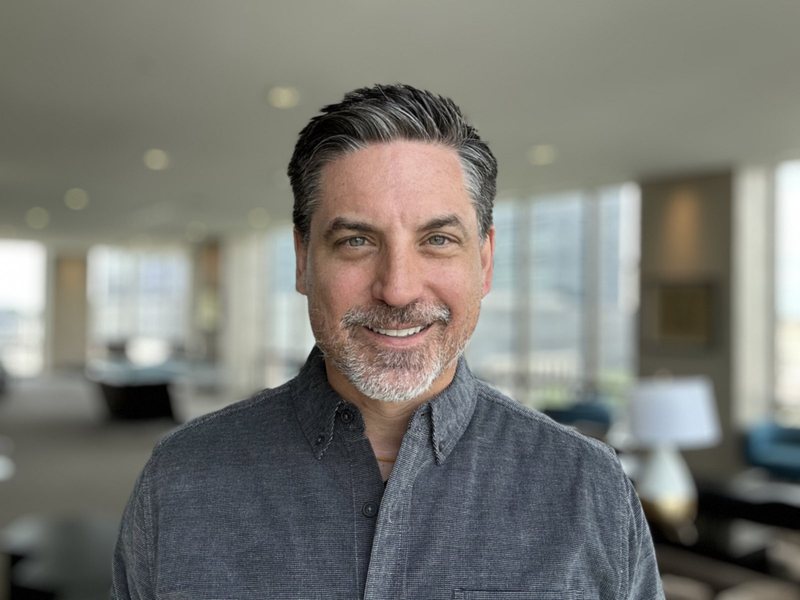
Founded a Lean/Agile software agency in 2003, led it through five consecutive years on the Inc. 500/5000 list, and exited via acquisition in 2013. The work draws on building a leadership team from the inside, not on theory.
Certified in Scaling Up, Metronomics, the Predictive Index, and exit planning (CEPA), with Lean/Agile roots and Flow Research Collective training. The right tool gets fitted to the company, not the company to the tool.
A decade as CEO of the agency, then fractional CEO and COO roles for high-growth businesses, then a coaching practice built on dozens of founder-CEO engagements. Every stage of the climb is familiar ground.
NEXTLEVEL opens with a three-hour strategy session, then settles into a rhythm that runs continuously rather than as phases that finish. The rhythm protects the important work from the urgent, so the strategic decisions stop losing to the week's fires.
A three-hour session that assesses where you are, sets annual objectives, and cuts them to 90-day priorities. It opens the engagement once rather than repeating every quarter. You leave with a plan for the year that the coaching then works against, so every session has a clear reference point.
Sixty-minute sessions on the decisions actually in front of you, from personnel calls to pricing to the conversation you keep avoiding. Quarterly planning folds in as each quarter turns, reviewing the last one and setting the next priorities, so the plan stays current as the business moves.
Check-ins on quarterly commitments, plus email and text access when something urgent cannot wait for the next call. Most of what changes how you operate happens between the calls, in the weeks where the new habits either hold or slip, so that is where the support sits.
These are founders and senior leaders who came in willing to hear what they did not want to hear. Their businesses are very different, from technology to design to healthcare, and the shift they made is the same.
"As an experienced CTO and executive leader, I've learned that an outside perspective and insight from a coach can identify key issues and help work through challenges more quickly."
"What surprised me about working with Bruce was how quickly we got to core issues and root causes."
"His first-hand experience as a Founder/CEO means he really knows what it's like to be in the driver's seat."
"He holds you accountable, pushes your thinking, and inspires you to reach ambitious goals."
"His coaching approach encouraged personal growth intertwined with practical business solutions."
"He knows what we need when we need it and has provided invaluable advice that has served us incredibly well during our 1st year of his program."
The answers are straight, including the ones about fit, time, and commitment. If a question is not covered here, bring it to the strategy call and it gets a straight answer there too.
NEXTLEVEL is one-to-one executive coaching for founder-CEOs and senior leaders. It opens with a three-hour strategy session that assesses your current state, sets annual objectives, and cuts them into 90-day priorities. From there it runs as an ongoing engagement at one of three levels, with quarterly planning built in so the plan stays current as the business moves. The work is your business rather than a curriculum, so the agenda shifts as your challenges do.
NEXTLEVEL works on you. LEADERSHIP360 works on the team, assessing composition, capability, and accountability against what the strategy actually requires. If the constraint is your own operating model, start here. If the constraint is who is around you and what they own, start there. Founders often run both, usually NEXTLEVEL first, because it is hard to reshape a team while you are still the person doing most of the work.
Coaching. Nobody is going to run your business for you or hand over a deck of recommendations to implement. The work is building your judgment and your systems, which means the capability stays with you after the engagement ends. That is slower than being told what to do, and it is the only version that survives contact with the next problem you face alone.
Six-month minimum at every level, and most engagements run considerably longer. The minimum exists because leadership habits do not change inside a single quarter. You can feel different in six weeks. The company does not usually look different until two or three quarters have gone by and the new way of operating has survived a few things going wrong.
The level moves with you. Founders often start at Velocity through a funding round, a reorganization, or a stretch where decisions are arriving faster than they can think them through, then step down to Momentum or Cadence once the work is holding on its own. There is no penalty for moving in either direction, and the fit gets reviewed at every quarterly planning session.
Yes. NEXTLEVEL is built for founder-CEOs and for senior team members growing into bigger roles. Running it alongside a CEO engagement is common when a leadership team is being built out, and it tends to accelerate both, because the CEO learning to delegate and the executive learning to own are two halves of the same handover.
Less than founders expect. Sessions are sixty minutes, at weekly, fortnightly, or monthly frequency depending on the level, plus the three-hour session that opens the engagement and a quarterly planning block. The real time cost sits in the work between sessions, and almost all of that is work you should be doing anyway, done deliberately rather than reactively.
Thirty minutes on where you are, what is in the way, and whether this is the right engagement. Expect questions about what has already been tried and what happened. If NEXTLEVEL is not the right fit, you will hear that plainly, along with what is, whether that turns out to be LEADERSHIP360, ROADMAP12, or something else entirely. There is no proposal at the end of it unless you ask for one.
The shift from doer to leader is a recurring theme in the Inc.com column and on the blog. These pieces go deeper on delegation, measuring leadership work, and the habits that let a founder step back. Read more in the Inc.com column and on the blog.

Letting go of micromanagement unlocks autonomy and performance by focusing on outcomes over control.
Read the article
Leaders of smarter teams succeed by trusting expertise, learning continuously, and deciding together.
Read the article
A two-week absence test shows whether founder dependence is a staffing gap or your own need to be needed.
Read the article
A four-step method for turning any leadership responsibility into a metric you can actually manage.
Read the postWhen no one knows who owns a decision, it stalls. A five-stage approach ends the bottleneck without chaos.
Read the post
Most leadership teams judge decisions by outcomes. Hindsight bias makes that judgment worse, not better.
Read the postBring where you are, what is in the way, and the thing you have been circling for months without resolving. The call covers whether NEXTLEVEL is the right next step, and if it is not, what is. It is a working conversation, not a pitch.
Fill out a short form to request a strategy call. It takes a couple of minutes, and there is no screening call in front of it. Bring the problem that is loudest right now, whether that is a team that waits on you, a calendar that never has room for the strategic work, or a step up that is coming fast.
You get a few specific questions ahead of time, so the call opens on the actual problem instead of thirty minutes of orientation. Short answers are enough, and rough notes work fine. The point is to arrive with the real situation on the table: what you are carrying, what has been tried, and what keeps coming back.
You work the topic directly on video. Expect to be pushed on your reasoning: that pressure is the point. The conversation tests what you believe about how you lead against what the evidence says, and it surfaces the questions that keep getting put off. The goal is a sharper read on the problem before the call ends.
You get a written follow-up with a read on the problem, what to do first, and the concrete next steps. If NEXTLEVEL is the right fit, the follow-up says so and explains why. If it is not, it says what is, whether that is LEADERSHIP360 or another program. Either way, you leave with something useful.