The Flywheel: How to Find the Engine That Builds Momentum in Your Business
Every company that grows has a core engine. The Flywheel maps the five to eight activities that feed each other, so you know where to push.
By Bruce Eckfeldt
The Tool
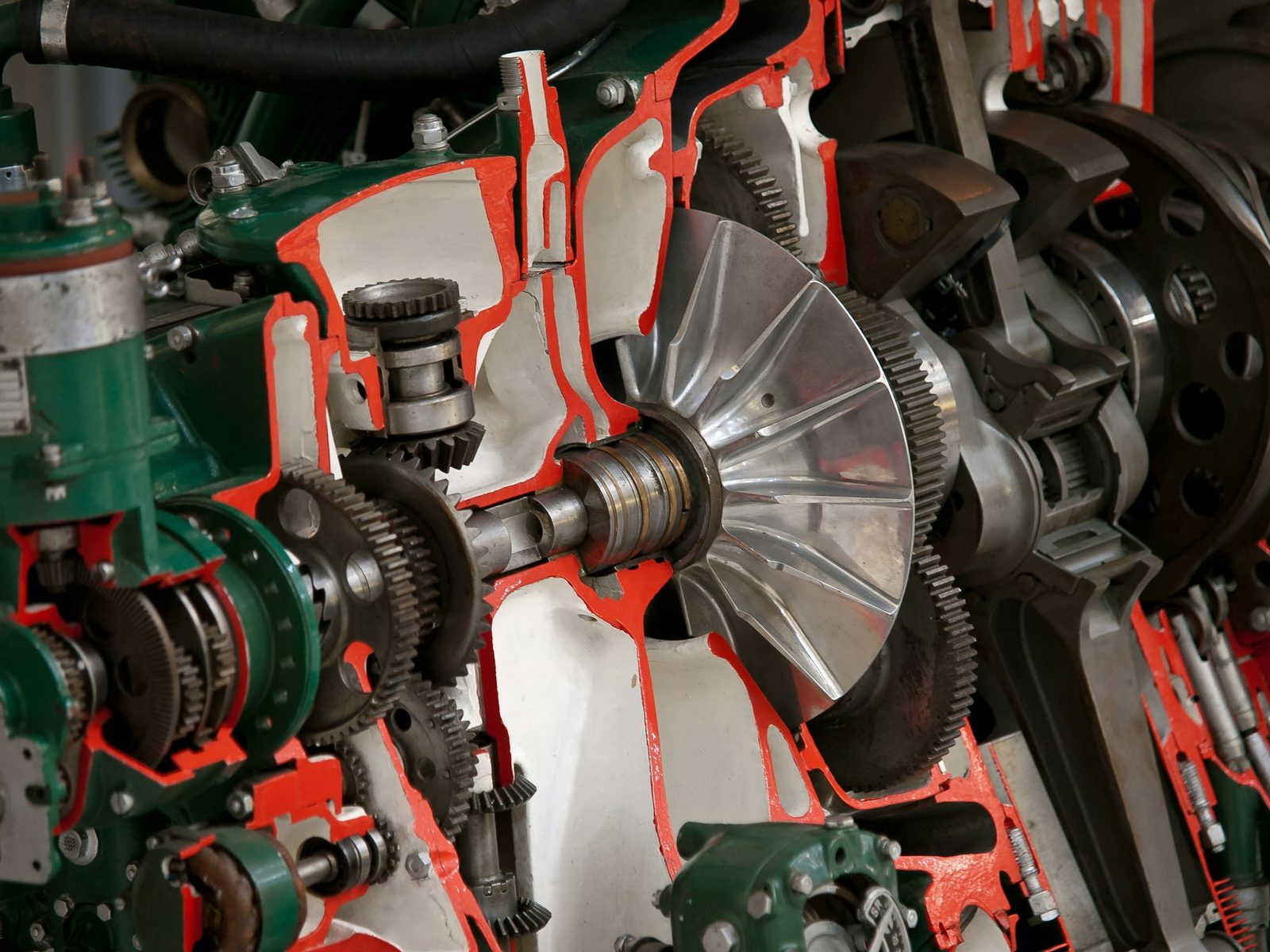
If you have ever ridden a spin bike, you already understand a flywheel. The first few pedal strokes are hard. There is a heavy weighted wheel at the front, and it resists you. Keep pushing and it starts to carry you. Try to stop and it keeps going. You have to grab the brake or push back against the pedals to slow it down.
A business flywheel works the same way. It is the core engine that creates momentum in your company: a handful of activities that feed each other, so that doing one well makes the next one easier. Once it is spinning, it helps carry you through setbacks. Jim Collins introduced the idea in Good to Great and went deeper in his short monograph, Turning the Flywheel. I use it with clients because it answers a question most leadership teams can’t answer cleanly: how does this business actually work?
Why Your Engine Matters
Most leadership teams can list their products, their markets, and their priorities. Very few can show how those pieces push each other forward. Without that picture, every initiative looks equally important. People pull in different directions. Strategy turns into a list.
When a company is struggling, I often find the cause right here. Revenue is soft, profits are thin, and everything feels hard. Underneath, the flywheel is either wobbly or broken. One step isn’t performing, or nobody is minding it, or the team never agreed on what the engine was in the first place.
A clear flywheel fixes that. It gives the team a shared answer to what the business is at its core. It tells you where to put energy. And when the world changes around you, it is the best place to start figuring out your next move. You go back to the engine and ask how to reapply it in a new situation.
How a Flywheel Works
A flywheel has five to eight core activities. They connect in a specific sequence, so there is a direction to them. One leads to the next, which leads to the next. They work as a system. And the last step feeds back into the first, which is what creates the positive feedback loop. Done right, with every step in good shape, the wheel picks up speed over time.
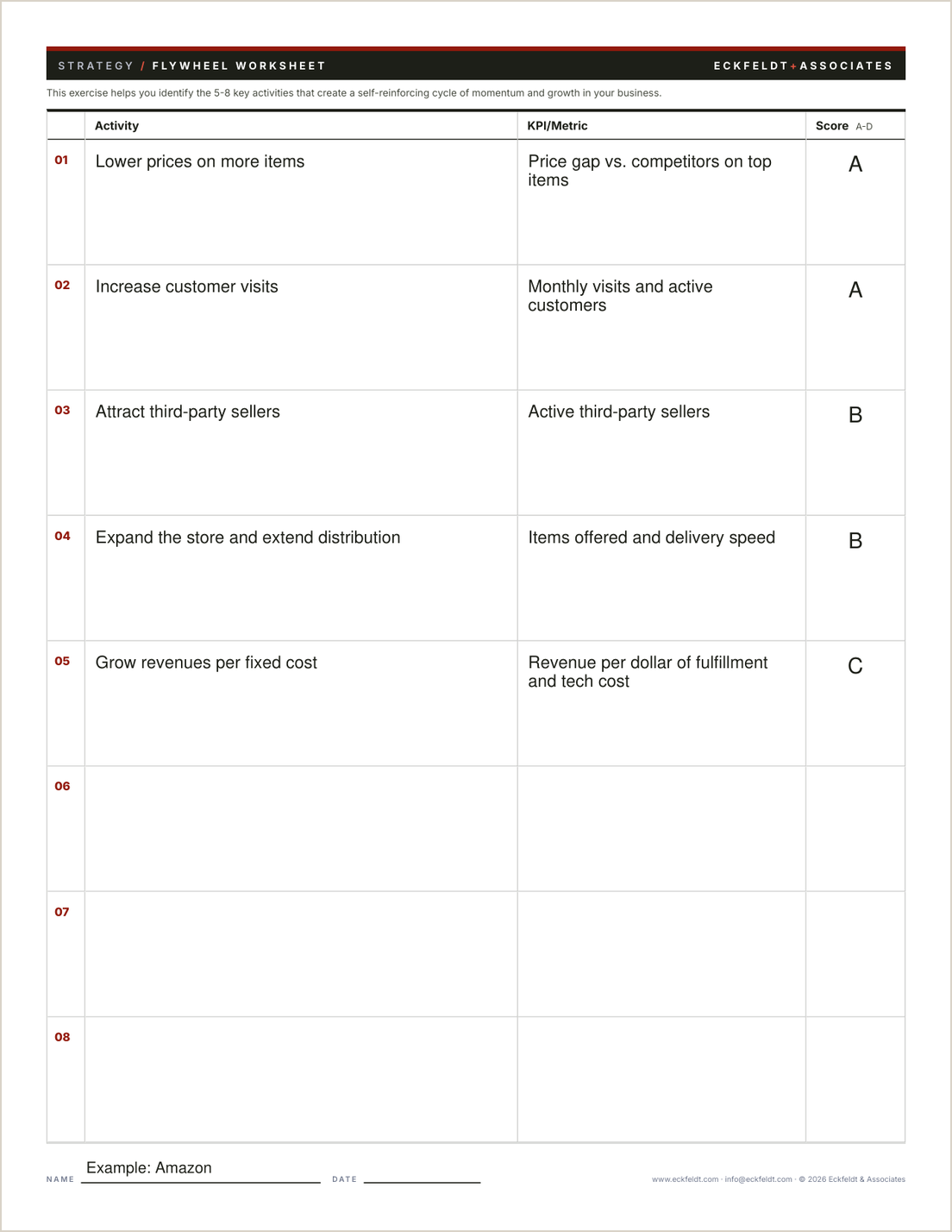
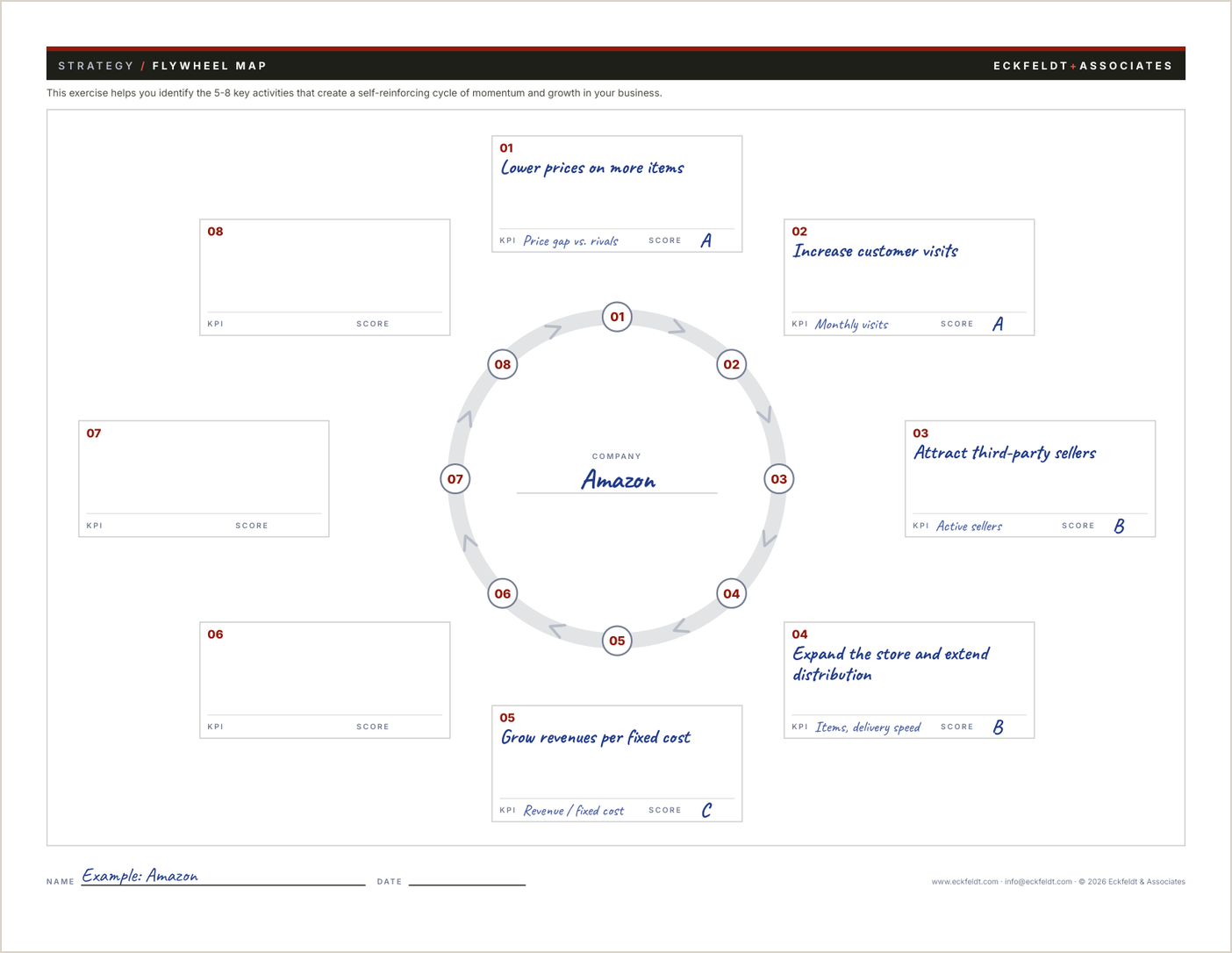
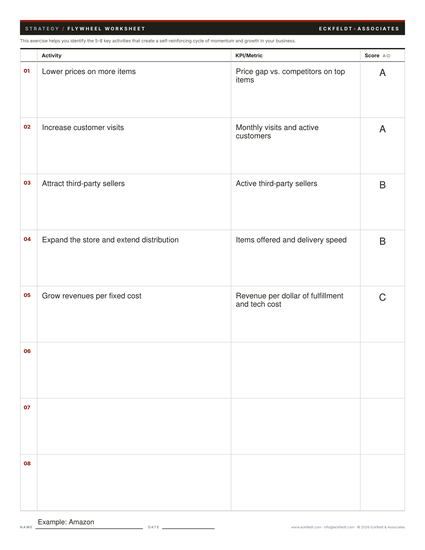
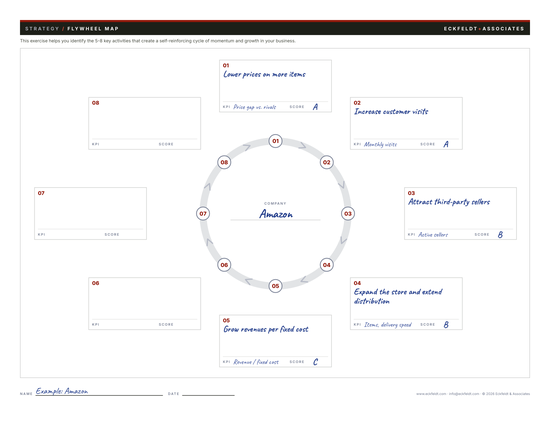
Amazon is the classic example. It starts with lower prices on more items. Low prices on lots of items bring more customers to the site. All those visitors attract third-party sellers. Sellers expand the store and extend distribution without Amazon having to do everything itself. That grows revenue faster than fixed costs, which creates the margin to lower prices again. Each step feeds the next, and the last feeds the first.
Most flywheels follow a few common shapes. You will probably recognize yours in one of them:
- Marketplace. Lots of sellers bring extensive listings, listings attract buyers, buyers increase transactions, and transactions bring in more sellers.
- Economies of scale. Large volume earns better supplier pricing and lower overhead, which allows lower prices, which drives more volume.
- Freemium. Free products bring new users, valuable upgrades convert some of them to paid users, and the profits fund more free product.
- Razor and blades. A subsidized handle brings in new customers, replacement blades generate the profit, and the profit subsidizes more handles.
- Data. Good insights attract new customers, customers increase usage, usage generates more data, and more data produces better insights.
Two conventions I use every time. Draw it clockwise. And put the leading activity, the one that kickstarts the wheel, at the top. On the worksheet, that leading activity is row 01.
When to Use It and When Not To
Use the Flywheel when you need the team to agree on what the business is at its core. It fits well in annual strategy planning, and it is worth reviewing every quarter. It is also my first move when a company is struggling and nobody can say exactly why.
It earns its keep in several other places:
- Diagnosing a business that feels stuck. Map the engine, then find the step that isn’t working.
- Designing the organization. Your functions should map to the activities on your flywheel. If the org chart has no connection to the engine, that is usually a problem.
- Building executive dashboards. One KPI per activity gives the leadership team the handful of numbers that matter most.
- Evaluating a pivot or expansion. When markets change, ask how your engine can be reapplied in the new context.
- Weighing an acquisition or joint venture. A target can look great on paper. If its flywheel runs on different activities than yours, the two will fight for resources rather than reinforce each other.
Don’t use it to invent the business you wish you had. A flywheel describes how the business works now, based on evidence. If you are still searching for a business model that works, you don’t have enough history to find the engine yet. And don’t use it in place of a plan. The flywheel tells you where to push. Your quarterly priorities still have to say what you will do this quarter.
Working Through the Worksheet
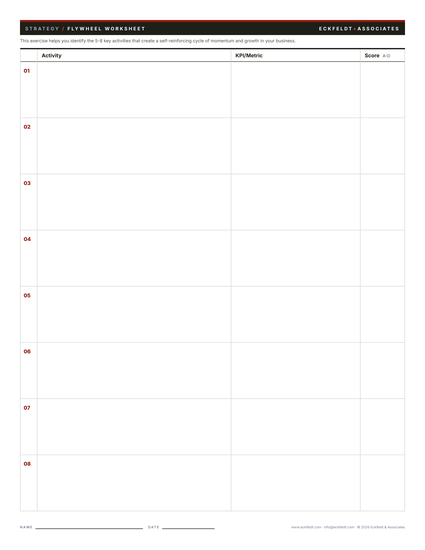
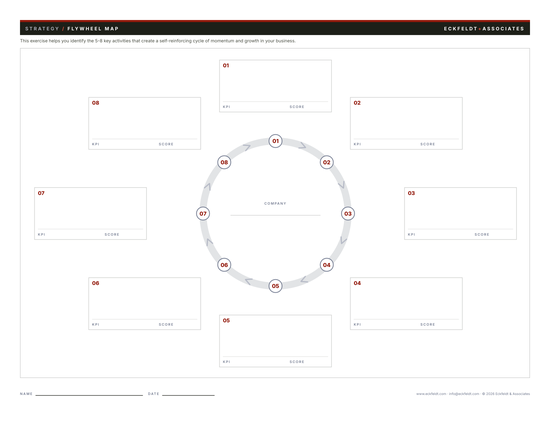
The worksheet comes in two versions. The table gives each activity a numbered row, a column for its KPI, and a column for its score. The diagram places the same steps around the wheel, with step 01 at the top and the rest running clockwise. Use whichever fits how you think. The thinking happens before you write anything down.
1. List your successes and failures. Start with the things that went really well: key wins, initiatives, clients. Then list the things that didn’t work. Successes show you what is part of your engine. Failures are just as useful. They are usually things you tried that sat outside your flywheel, and they tell you where the edges are.
2. Brainstorm the activities behind them. Look at your successes and ask what activities led to them. Look at the failures and ask which activities were missing, or which ones you were doing that don’t belong. Start with more than you need. It is much easier to combine and cut later than to discover you missed a key step.
3. Winnow to five to eight and put them in order. Find the cause-and-effect chain. What leads to what, and how does the last step lead back to the top? Write them in the rows in that order, with the leading activity in row 01. The output of each row should be the input to the next.
4. Test it. Go back to the successes and failures from step one. A good flywheel explains them. You should look at a big win and think, of course, that was right in our sweet spot. You should look at a miss and see the step it skipped or worked against. There is often a small aha here. Then run five questions:
- Is each step truly a separate activity, something you could do without the others?
- Can any steps be combined because they are really one activity?
- Do you need every step? If you can jump from one to the next without it, take it out.
- Are you missing a step? If a jump feels too big, something probably sits in between.
- Is each step labeled so anyone in the company would get it? This is not marketing copy. It just has to make sense quickly.
Then run one more test. Check the whole flywheel against your hedgehog: what you are expert at, what the market values and pays for, and what you are passionate about. If your flywheel misses one of the three, you have the wrong flywheel.
5. Put a KPI on each activity. For each row, find a measurement that tells you how that activity is doing, ideally something you can track weekly. This turns the flywheel from a picture into a dashboard.
6. Name an owner and grade each step. Before you score, ask who on the leadership team owns each activity. Sometimes you get two names. Sometimes you get none, and that is usually your first problem. Write the owner’s name in the activity box, under the activity. Then have each owner grade their step from A to D in the Score column.
7. Decide where to push. Fix before you accelerate. If a step is graded C or D, improve it before you pour energy into spinning the wheel faster. A wobbly flywheel only gets wobblier at speed. Once the steps are sound, look at your leading activity. Fueling the top of the flywheel is how you build momentum.
Three Flywheels You Already Know
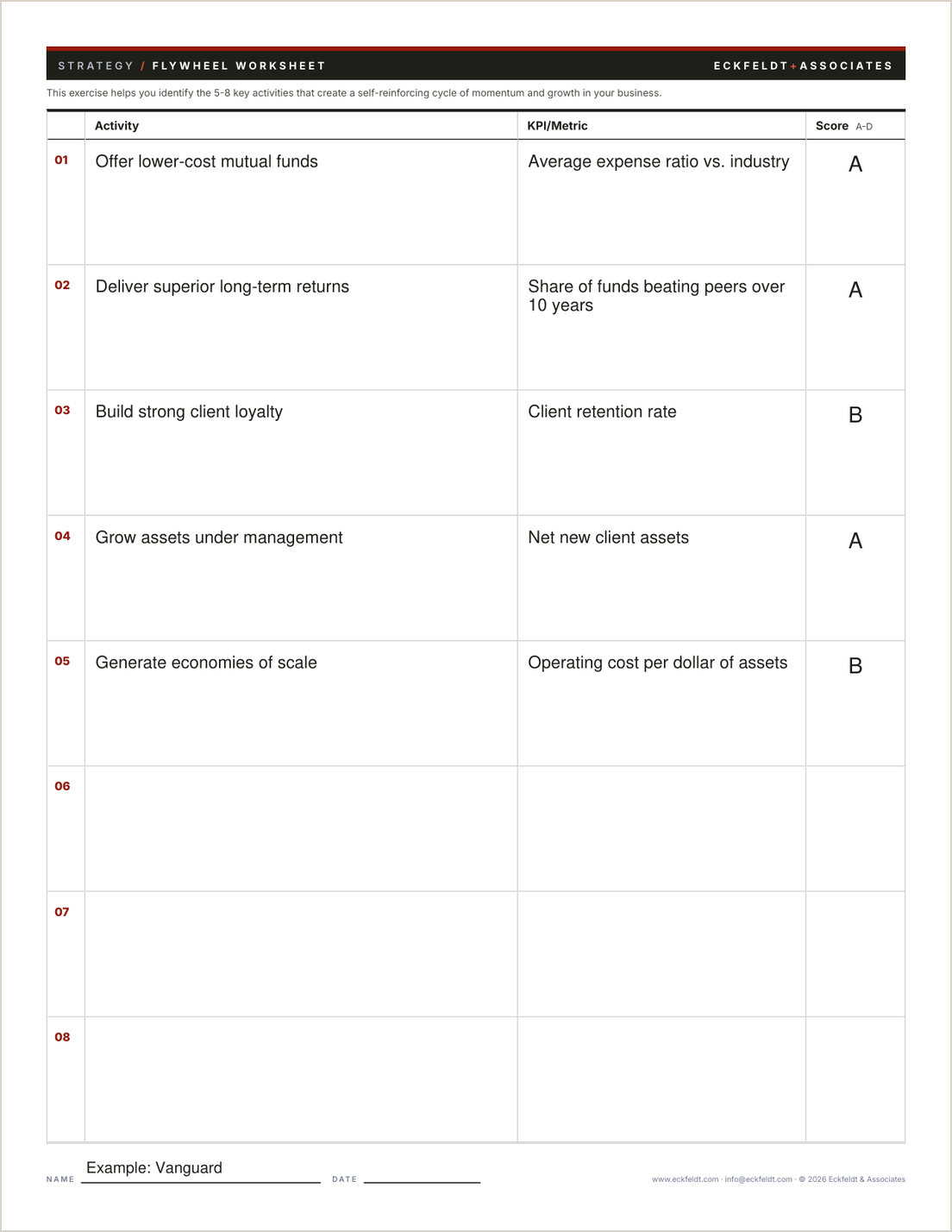
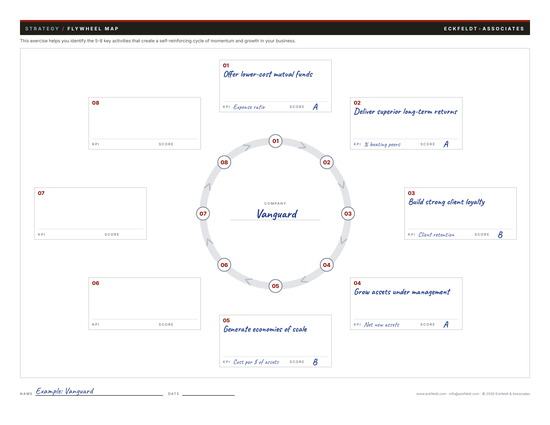
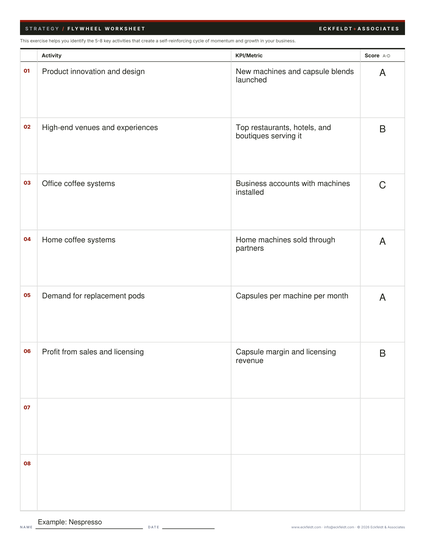
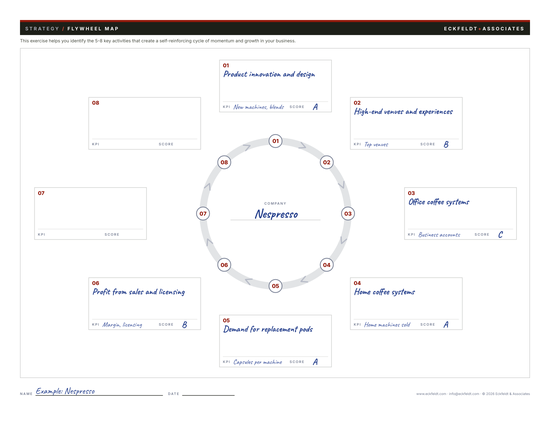
These three are filled in on the same worksheets you will use, in both versions. The activities come from how each company is widely described. The KPIs and grades are illustrative, written the way a leadership team might score itself, to show how the scoring points to where to push.
Amazon
Amazon is a marketplace flywheel built on scale. The leading activity is lower prices on more items. Notice what the grades point to. The first steps are strong. The weakest step is the last one, growing revenue per dollar of fixed cost. For years Amazon spent heavily on fulfillment and technology ahead of revenue. That last step is what funds lower prices, so it is the one to strengthen.
Vanguard
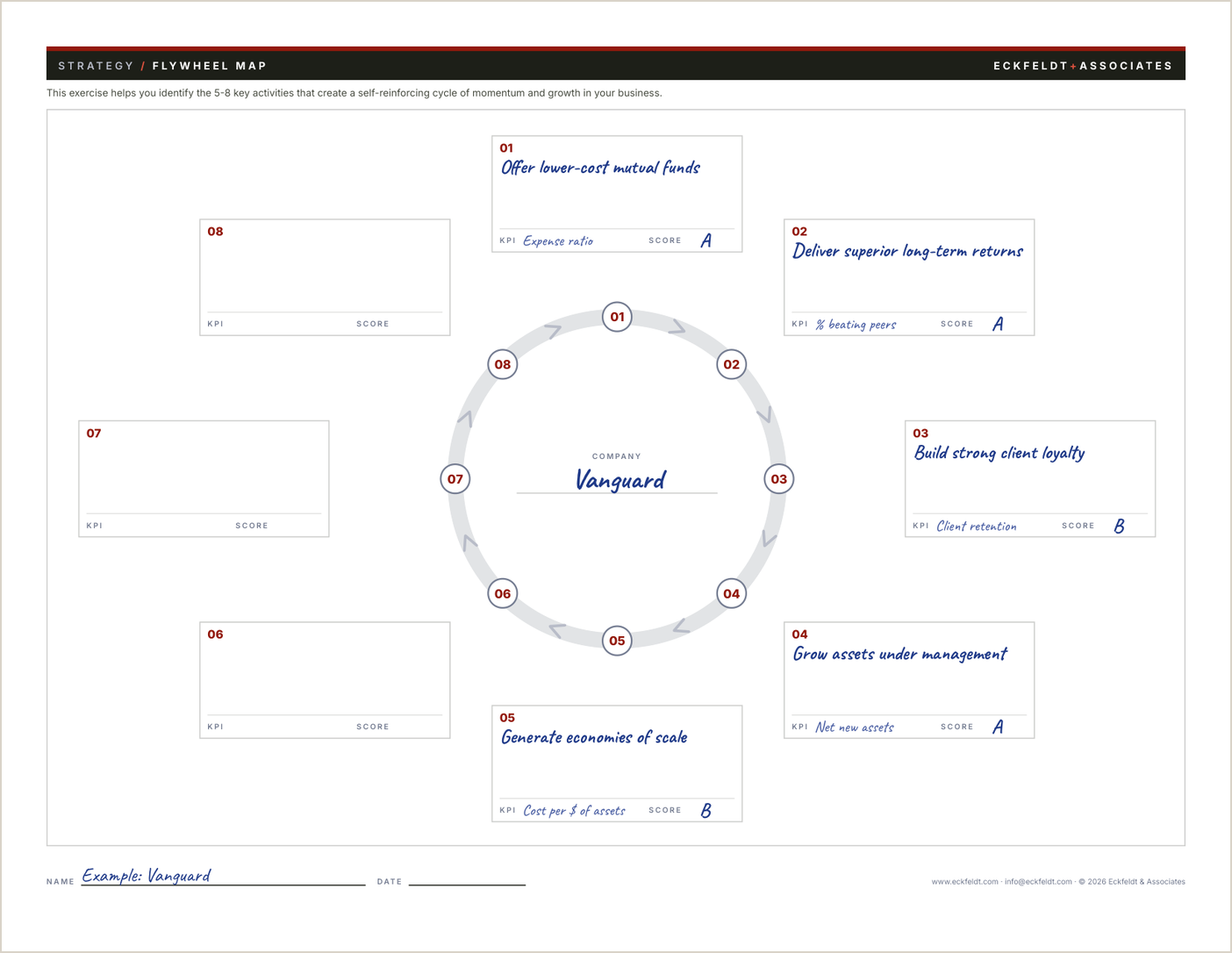
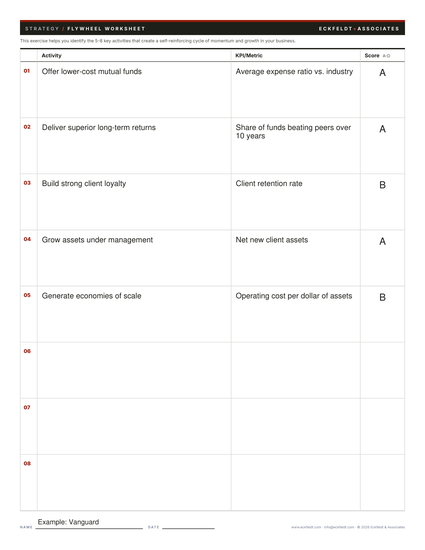
Vanguard’s flywheel shows how inevitable each step can feel. Offer lower-cost funds, and you almost can’t help delivering better long-term returns than higher-cost funds holding the same assets. Better returns build loyalty, and Vanguard’s loyal investors are close to a fan club. Loyalty grows assets under management. More assets spread the same overhead further, which pays for even lower costs. Five steps, each one a near-certain result of the one before.
Nespresso
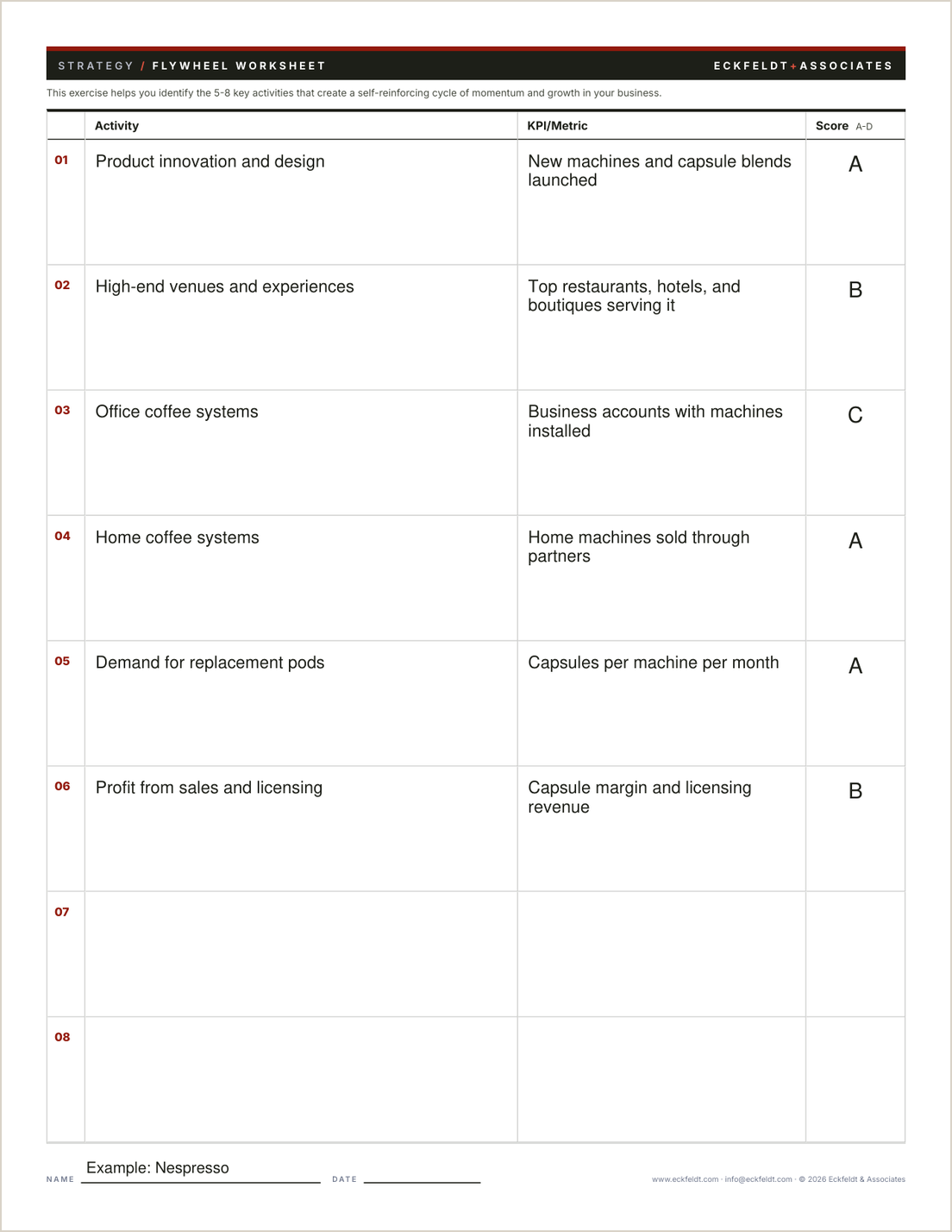
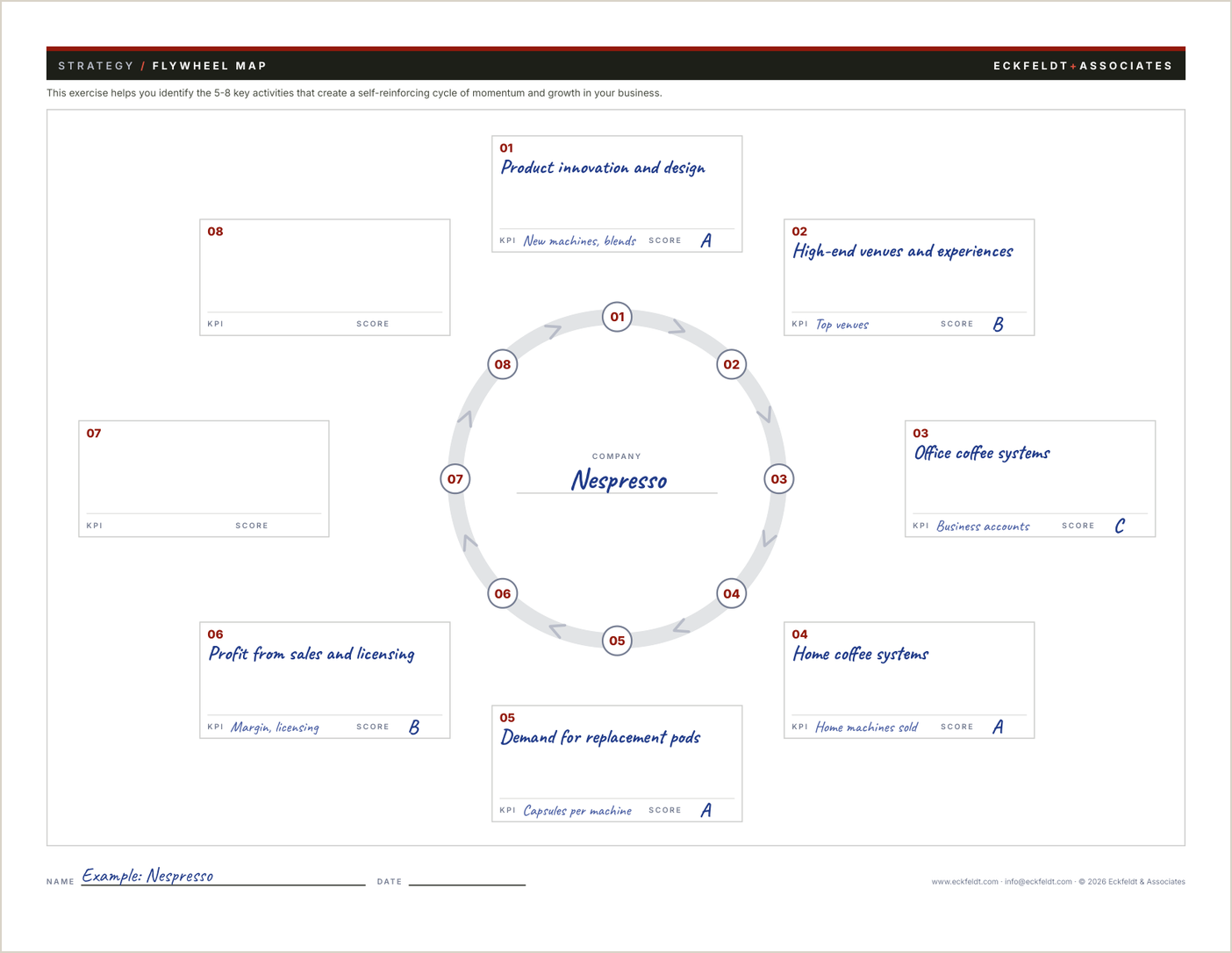
Nespresso is a good test of order. The leading activity is product innovation and design: the machine, the capsules, and the pressure system that make a real espresso rather than drip coffee. Next come high-end venues, where people first meet the product. Here is the step people miss. Nespresso didn’t jump from premium venues straight to the home. It went through the office. People got used to the coffee at work and then brought a machine home. Home machines create steady demand for capsules, and capsule sales plus licensing fees fund the next round of design. Leave out the office step and the flywheel no longer explains how the business actually grew.
Where This Breaks Down
If I were watching your team build its flywheel, these are the things I would flag.
The aspirational flywheel. It is easy to draw how you want the business to work. That isn’t bad on its own. But if it is disconnected from the business you have today, it won’t help you make decisions now. Map the current flywheel first. Then, if you want, draw the one you are aiming for and look at the gap. If the two share nothing, getting there means rebuilding the company, which is a much harder strategy than it looks.
Skipping the test. The team builds a flywheel and moves on without checking it against real wins and losses. The test is where the insight is. If your flywheel can’t explain why a past success worked, it isn’t your flywheel yet.
Too many steps. Starting with a long list is fine. Ending with one is not. If I see ten, twelve, or fifteen steps, you have drawn a process map, not an engine. The flywheel is the essence of what you do, not a checklist.
Labels that don’t land. Steps written in departmental jargon or technical shorthand won’t travel. Everyone in the organization should be able to read your flywheel and get it. If a label needs explaining, rewrite it.
The wrong order. Sometimes the activities are right and the sequence is off. Two steps get flipped, or you mistake an effect for a cause. Test each connection. Ask what happens between this step and the next that puts them in that order.
Two flywheels where there should be one. Teams with more than one line of business often want a flywheel for each. For most growth-stage companies, I would double down on one flywheel that really works rather than keep two spinning. And if the two lines feed each other, they aren’t separate flywheels. They are one bigger flywheel, and your job is to find the connection.
Your Next Step
Download the worksheet below, along with the three examples. Try a first draft on your own, then do it with your team. Bring in your leadership team plus a few people who have been around long enough to know what works and what doesn’t.
If the group is bigger than five, break it into small teams of three to five. Have each team build its own flywheel independently. Then put them side by side and compare. Where do they agree? Where do they differ? Are two teams describing the same step in different words, or did one team split a step the others kept whole? Combine them into one, then assign owners, grade each step, and decide where to push first.
Downloads
- Worksheet, PDF, 2 pages Flywheel Worksheets
Two versions of the same worksheet. A table to list your five to eight activities in order with a KPI and grade for each, and a diagram that places them around the wheel. Print them or fill them in on screen.
Download - Example, PDF, 2 pages Example: Amazon
A marketplace flywheel. Lower prices bring visits, visits bring sellers, sellers expand the store, and scale pays for lower prices again. Table and diagram.
Download - Example, PDF, 2 pages Example: Vanguard
An economies of scale flywheel. Low-cost funds deliver better returns, returns build loyalty, loyalty grows assets, and scale lowers costs again. Table and diagram.
Download - Example, PDF, 2 pages Example: Nespresso
A razor and blades flywheel with a twist. Six steps, including the office step most people miss on the way from premium venues to the home. Table and diagram.
Download
Keep Going.
More on this topic from the Inc.com column, Field Notes, and The Playbook.

Get the Next One.
Every new post and playbook lands in Better, Faster, my weekly newsletter for founder-CEOs, along with questions for your team and a book worth reading.