Flooring It: Why Pushing Harder on a Wobbly Flywheel Makes Growth Worse
When growth stalls, the instinct is to push harder at the top. If a step further down your business flywheel is out of balance, more speed only makes the shake worse.
By Bruce Eckfeldt
The Problem
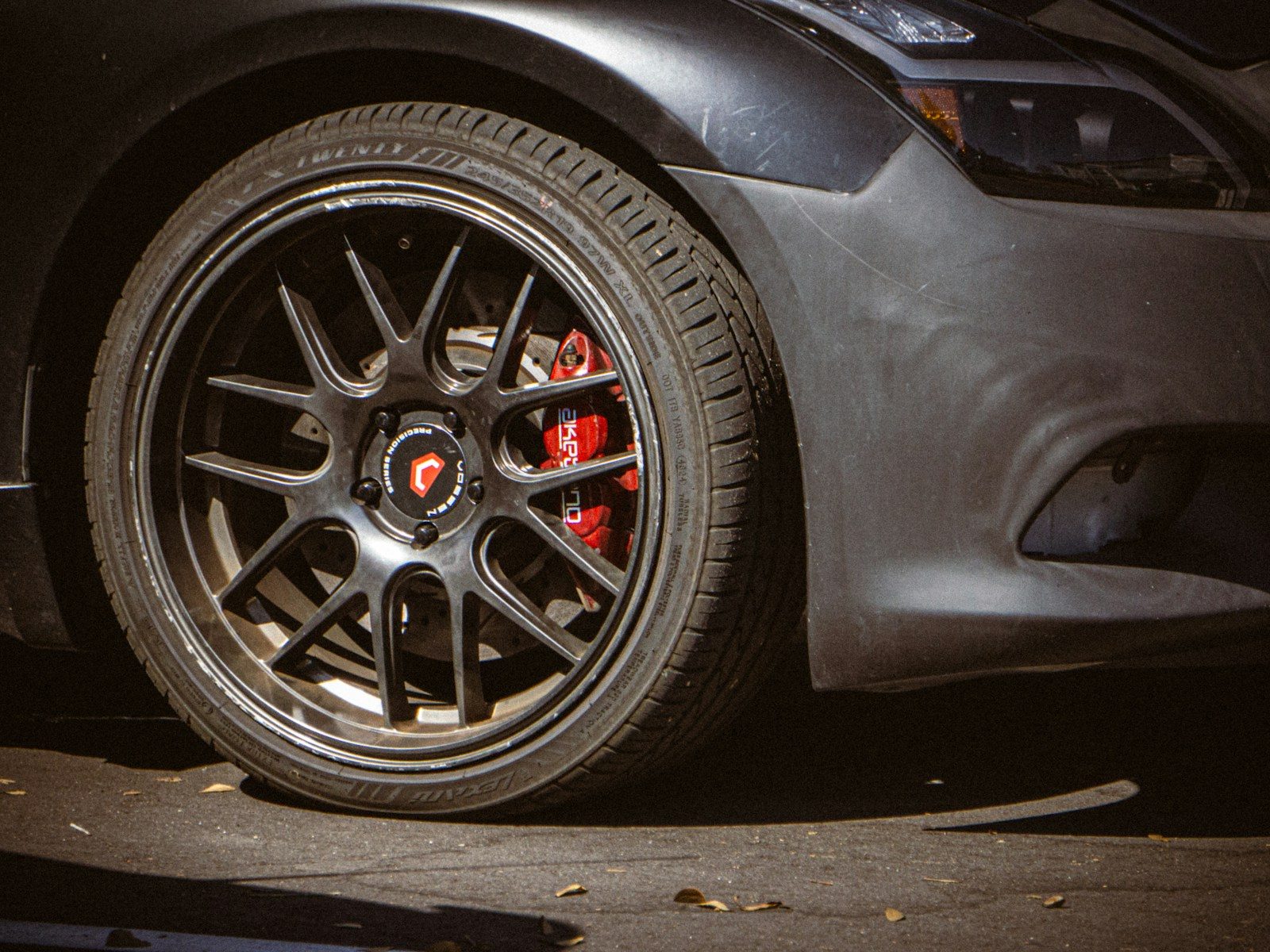
If you have ever driven a car with a wheel out of balance, you know the feeling. At thirty miles an hour you barely notice it. At fifty, the steering wheel starts to buzz in your hands. At seventy, the whole car shakes. Nobody’s answer to that is to press harder on the gas.
But that is exactly what most founder-CEOs do when growth stalls.
Revenue flattens for a few quarters. Deals take longer to close. The team is working harder than ever and getting the same result. So the CEO goes back to what worked before. Hire more salespeople. Raise the marketing budget. Launch a new offer. Push.
I call this Flooring It. It is the instinct to answer stalled growth with more speed at the top of the business, when the real problem sits somewhere further down.
Every company that grows has a business flywheel: a handful of activities that feed each other, so that doing one well makes the next one easier. When one of those steps is out of balance, speed doesn’t fix it. Speed makes the shake worse, and it wears out everything around it.
In my work with leadership teams, the broken step is rarely where the CEO is pushing. It is usually a couple of steps down the wheel. This post is about how to find it, why it hides there, and what to fix before you put your foot down again.
What Flooring It Looks Like
From the outside, Flooring It looks like ambition. The CEO is leaning in. The budget is going up. The board likes the energy. Inside the business, it feels different. Everyone is busier, and nothing is getting easier.
These are the signs I look for:
- Customer acquisition cost keeps climbing. Each new customer costs more than the last one did, and nobody can quite explain why.
- Activity is up but conversion is down. The sales team is hitting its call and meeting numbers. The pipeline just doesn’t turn into revenue the way it used to.
- New logos come in, but repeat business and referrals stay flat. The top of the funnel is full. The back end isn’t paying it forward.
- Delivery is stretched. Quality slips. Deadlines move. Your best operators are tired, and some of them are quietly updating their resumes.
- Every push buys less than the one before. The last marketing increase moved the number a little. The one before that moved it more.
On a leadership team, each of these gets treated as its own problem. Sales owns the conversion issue. Operations owns the delivery issue. Finance flags the acquisition cost. Each one gets its own initiative.
Usually they are one problem. One step of the flywheel isn’t doing its job, and every other step is straining to make up for it. Pushing at the top sends more volume into the broken step, and the strain spreads.
Why the Wobble Is Usually Two Steps Down
Jim Collins introduced the flywheel in Good to Great, and it is one of the tools I use most with leadership teams. A business flywheel is five to eight core activities connected in a loop. Each one feeds the next, and the last one feeds back into the first. The step that kicks the whole thing off sits at the top. I call it the leading activity.
For most growth companies, the leading activity lives in sales or marketing. That is where the CEO looks first when growth stalls. It is also rarely where the problem is. There are four reasons the wobble hides further down.
The top is what the CEO sees. Pipeline reports, lead counts, and win rates show up every week. The CEO usually owns that part of the business, or did until recently. It gets attention by default.
The steps below have weaker owners. Delivery, onboarding, account management, and referrals often have two people sharing them, or nobody clearly in charge. A step with no single owner drifts.
The steps below have no weekly number. Most companies can tell you leads this week. Few can tell you how many customers came back this week or how many referrals arrived. What isn’t measured doesn’t get fixed.
The damage downstream shows up slowly. A customer who had a mediocre experience doesn’t call to complain. They just don’t reorder. By the time the revenue line reflects it, months have passed and the cause is hard to trace.
Put those together and you get a predictable pattern. The top step looks like the problem because it is the step you can see. The broken step two down keeps leaking, and more volume at the top hides the leak for a while.
Toyota is the most famous company to admit this out loud. Testifying before Congress in 2010 about its recalls, Akio Toyoda said the company had “pursued growth over the speed” at which it could develop its people and its organization. The growth was real. The steps underneath it couldn’t keep up.
What Flooring It Costs: The Groupon Story
Groupon is the clearest public example I know of a company Flooring It with a step two down the wheel out of balance.
The flywheel looked simple. Sign up subscribers. Offer them deep discounts from local merchants. Subscribers buy the deals and walk into those businesses. Merchants win new regular customers, so they run more deals. More and better deals attract more subscribers. Round and round.
The leading activity was subscriber growth, and Groupon pushed it hard. Ahead of its 2011 IPO, most of the company’s spending was going to marketing and subscriber acquisition. It had 143 million subscribers by the third quarter of that year. Only about 30 million of them had bought a deal.
The broken step was two down: merchants getting customers who came back. Deal buyers tended to hop from one discount to the next. They used the coupon once and moved on. In a Raymond James survey of 115 merchants who had run daily deals, 39 percent said they were unlikely to run another promotion in the next couple of years. Thirty-two percent said they had lost money on the deal.
Here is how Groupon’s leadership team might have scored its flywheel around 2011 on the same worksheet I use with clients. The top step earns an A. Two steps down, the grades fall apart.
Groupon's flywheel scored on the Flywheel worksheet, around 2011. The activities come from public accounts of the model. The KPIs and grades are illustrative.
Now look at what Flooring It did to that wheel. More subscribers meant more one-time deal hunters walking into merchants’ stores. That made the merchant step worse, not better. Merchants who had been burned didn’t come back, so the sales team had to find new ones to replace them. One analyst pointed out that the model only scaled with the size of the sales force. The company was spending more at the top to refill a step that kept draining.
From the outside, the numbers looked like a rocket ship. Inside the flywheel, the shake was getting worse at every speed. Groupon’s growth stalled, the stock fell, and the board fired its founder-CEO, Andrew Mason, in 2013.
You don’t need 143 million subscribers to make this mistake. I see the same shape in mid-market companies all the time. A services firm adds two salespeople while project delivery is already behind. A product company doubles its ad spend while churn quietly climbs. The top step works. The step two down can’t keep up, and each push at the top makes it worse.
What Good Looks Like: Starbucks Takes Its Foot Off the Gas
Starbucks shows the opposite move.
In 2006 and 2007, Starbucks was opening about 1,300 new stores a year. The leading activity, new locations, was running flat out. Further down the wheel, the step that actually built the business was slipping. That step was the in-store experience: a well-trained barista making a great drink, the thing that turned a visit into a daily habit. Training couldn’t keep pace with the openings. Same-store sales fell close to 10 percent.
When Howard Schultz came back as CEO in early 2008, he didn’t respond with more speed. On February 26, 2008, he closed every Starbucks store in the U.S., about 7,100 of them, for three and a half hours to retrain baristas. Analysts didn’t like it. It cost real revenue that afternoon. Later that year he went further, closing 600 underperforming stores and cutting planned U.S. openings for the next year to fewer than 350.
He took his foot off the gas, fixed the step that was out of balance, and only then let the wheel speed back up.
Most founder-CEOs will never need to close 7,100 locations. The lesson scales down fine. When a step two down the wheel is broken, the right move is often to slow the top on purpose. Hold the sales hires for a quarter. Hold the marketing increase. Put that money and attention into the step that is wobbling. It feels like going backward. It is the only way the next push at the top will actually carry you forward.
Diagnostic: How To Find the Step That's Out of Balance
Before you approve the next sales hire or marketing increase, run these five questions with your leadership team.
- Can your leadership team draw your flywheel the same way? Ask each person to sketch it on their own, then compare. If you get five different wheels, nobody is minding the same engine, and the step no one drew is often the one that is broken.
- Which step has no weekly number? Go around the wheel and name the KPI for each step. The step where the room goes quiet is your first suspect. A step nobody measures is a step nobody can fix.
- Which step has two owners, or none? Put one name on each step. When you get two names, or a pause, you have found a step that is drifting. Ownership is usually the first problem, not the last.
- If leads doubled tomorrow, which step would break first? Everyone on the team usually knows the answer to this one. They just haven’t been asked. That step is where the shake will show up when you push.
- Is acquisition getting more expensive while repeat business and referrals stay flat? That combination is the signature of Flooring It. The top is working harder to replace what the bottom of the wheel is losing.
If two or more of these point to the same step, you have found your wobble. Fix it before you touch the gas.
Where To Start: Fix the Wobble, Then Fuel the Top
The sequence matters more than any single step. This is the order I use with leadership teams.
- Map the flywheel you actually have. Start with your biggest wins and your biggest misses. Ask what activities led to the wins and what was missing from the misses. Winnow to five to eight steps in a loop, with the leading activity at the top. Map the business you run today, not the one you wish you had.
- Put one owner and one weekly KPI on every step. No shared ownership. No step without a number. This alone usually surfaces the problem.
- Grade each step from A to D. Have each owner grade their own step, then let the team push back. Honest grades are the point.
- Fix anything graded C or D before you accelerate. This is the hard part. It means holding the next push at the top while you repair the step that is out of balance. Give it a quarter. Give it a named owner and a clear target.
- Then fuel the leading activity. Once every step is sound, more speed at the top finally does what you wanted it to do. The wheel carries the effort instead of shaking it apart.
I use a one-page Flywheel worksheet for this, along with filled-in examples from Amazon, Vanguard, and Nespresso. Download the Flywheel worksheet (free with registration). Draft a version on your own first, then build it with your team. The differences between the two drafts are usually where the conversation gets interesting.
Questions for You and Your Team
These are worth raising at your next leadership meeting. Give people a few minutes to answer on their own before you discuss.
- The last time growth stalled, where did you push first? Most teams can name the move in seconds. Fewer can say whether it fixed the problem or just covered it for a while.
- Which step of your flywheel would you grade lowest today? Ask everyone to answer independently. If the answers cluster on one step, you already know where to start.
- What would it cost to slow the top for one quarter while you fix that step? Put a real number on it. It is almost always smaller than the cost of another year spent pushing against a wheel that shakes.
The goal isn’t to have perfect answers. It’s to surface whether Flooring It might be affecting your business.
Share This Post

Bruce Eckfeldt is a business coach and strategic advisor to founder-CEOs of growth-stage companies, a former Inc. 500 CEO, and the author of Springboard, a founder's guide to selling your company. More from Field Notes →
Keep Going.
More on this topic from the Inc.com column, Field Notes, and The Playbook.
The Biggest Barrier to Scaling Past $10 Million Isn't Sales. It's the Founder
Why more sales effort rarely fixes stalled growth when the constraint sits somewhere else.
Read the articleA Growing Company Hides Bad News From Its Founder in 5 Predictable Places
Where the problems a CEO cannot see tend to hide as a company grows.
Read the articleAn Architect's Secret to Fixing Broken Meetings: Trace the Leak to the Roof
Tracing a visible symptom back to the source that is actually causing it.
Read the articleGet the Next One.
Every new post and playbook lands in Better, Faster, my weekly newsletter for founder-CEOs, along with questions for your team and a book worth reading.